Why Your Favorite Concentrate Started as a Chemistry Problem
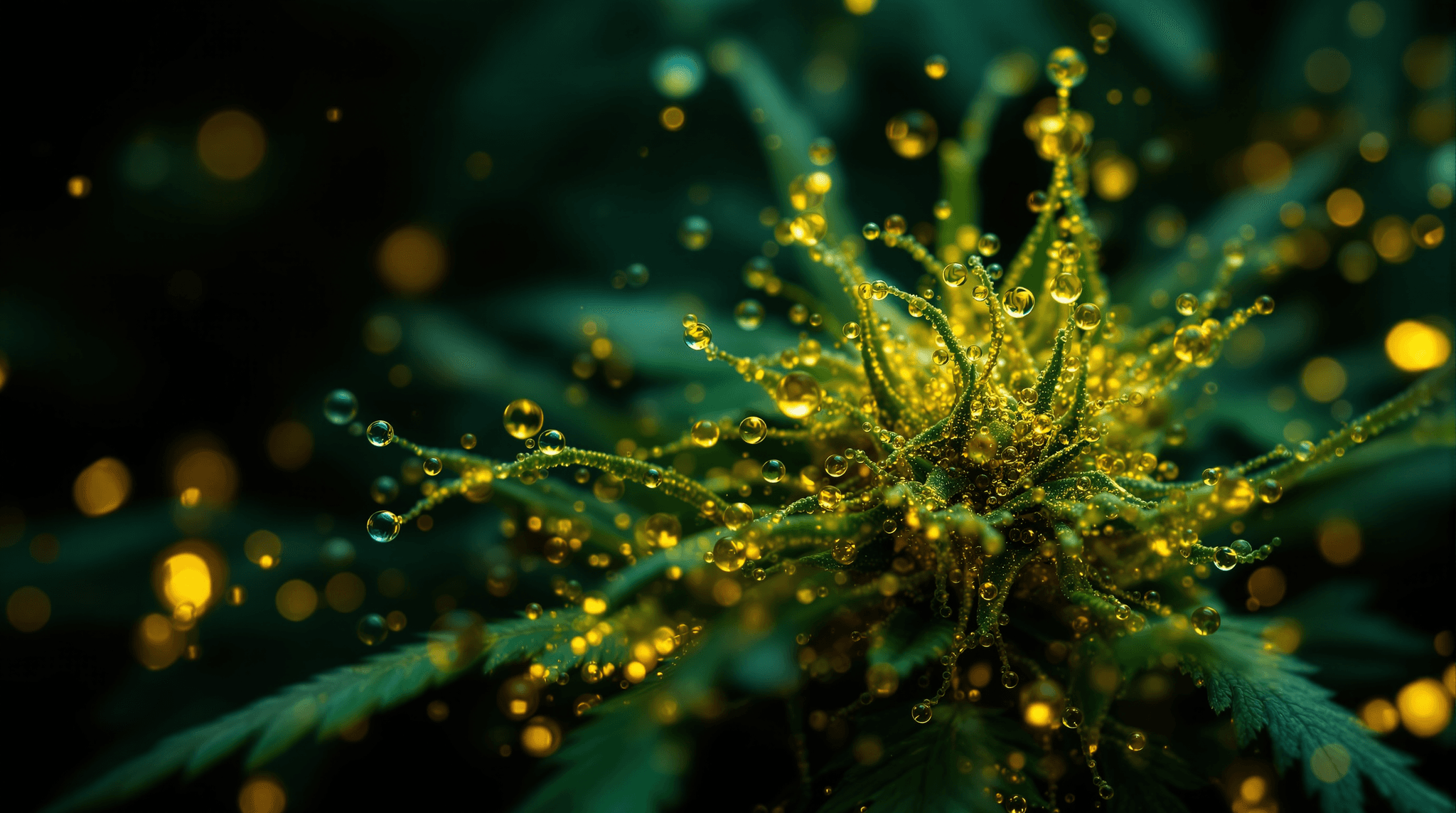
The sticky resin coating cannabis flowers has captivated humans for millennia. Ancient hash makers in Morocco and Afghanistan discovered they could separate these precious trichomes by sifting dried plants through screens. But modern extraction? That's a whole different beast.
Today's extraction artists aren't just solving a fundamental chemistry puzzle: how to selectively pull specific compounds from plant matter while leaving everything else behind. The evolution from hand-rubbed charas to precision CO2 extraction represents one of the most dramatic technological leaps in cannabis history.
Walk into any dispensary and you'll see the results of this chemistry revolution. Shatter that looks like amber glass. Sauce dripping with terpenes. Live rosin that captures the essence of fresh-frozen flowers. Each product represents a different solution to the same problem: how do we get the good stuff out?
The Two Extraction Universes: Solvent vs Solventless
Every extraction method falls into one of two camps, and understanding this divide is crucial for anyone serious about concentrates.
Solvent-based extraction uses chemical compounds to dissolve cannabinoids and terpenes from plant material. Think of it like making coffee — hot water (the solvent) pulls caffeine and flavor compounds from ground beans. In cannabis extraction, solvents like CO2, butane, or ethanol do the heavy lifting. According to the National Institute on Drug Abuse, "Cannabis extraction methods include solvent-based techniques like CO2 extraction, butane hash oil (BHO), and ethanol extraction, as well as solventless methods such as rosin pressing and ice water hash extraction."
Solventless methods take a completely different approach. Instead of chemistry, they rely on physics — heat, pressure, water, or mechanical separation. No chemicals touch your cannabis. Just pure physical force separating trichomes from plant matter.
The choice between solvent and solventless isn't just philosophical. It fundamentally changes what ends up in your concentrate. Solvent methods can achieve higher yields and create consistencies impossible with solventless techniques. But solventless preserves the plant's original terpene profiles in ways solvents sometimes can't match.
Our budtenders at the Canoga Park store have noticed that the afternoon crowd — working professionals in their 30s and 40s — aren't looking for the highest THC when it comes to concentrates. They're asking about terpene profiles and flavor notes. The education content we publish directly drives these conversations about extraction methods and their impact on final products.
CO2 Extraction: The Goldilocks Method
CO2 extraction occupies a unique sweet spot in the extraction world. It's technically a solvent method, but CO2 is so safe it's in your soda. The magic happens when CO2 enters its supercritical state — not quite liquid, not quite gas, but something in between with remarkable extraction properties.
Here's where the technical details matter. At pressures between 1,000 and 5,000 PSI and temperatures around 90-100°F, CO2 becomes supercritical. In this state, it moves through plant material like a gas but dissolves compounds like a liquid. By adjusting pressure and temperature within this range, extractors can target specific compounds. Want more terpenes? Lower the pressure. After more cannabinoids? Crank it up.
The National Institute on Drug Abuse notes that "CO2 extraction is considered one of the safest methods as it leaves no residual solvents and can be precisely controlled for temperature and pressure." This precision control is why CO2 extraction dominates the commercial market. Operators can dial in exact parameters to create consistent products batch after batch.
But CO2 extraction isn't just about safety and control. The ability to fractionate — selectively extract different compounds at different pressures — opens up possibilities other methods can't touch. First pass at low pressure for terpenes. Second pass at higher pressure for cannabinoids. Recombine them for a full-spectrum extract, or keep them separate for targeted products.
The equipment investment is substantial — commercial CO2 extractors start around $40,000 and climb into six figures. But for operations prioritizing consistency, safety, and versatility, CO2 extraction delivers results worth the price tag.
Hydrocarbon Extraction: Fast, Potent, and Controversial
Mention butane extraction in mixed company and watch the room divide. Hydrocarbon extraction using butane or propane remains controversial, but there's no denying its effectiveness. These solvents pull cannabinoids and terpenes with ruthless efficiency, creating some of the most potent concentrates available.
The process seems simple enough. Cold liquid butane flows through cannabis, dissolving the good stuff while leaving plant matter behind. The solution gets collected and the butane evaporates, leaving behind golden oil. But simplicity is deceptive. Temperature control, pressure management, and purging protocols separate professional extraction from dangerous amateur attempts.
Modern closed-loop systems have changed hydrocarbon extraction from backyard danger to laboratory science. These systems recover and recycle solvents, preventing atmospheric release and ensuring complete purging. Professional operations follow strict protocols, with residual solvent testing confirming products meet safety standards.
The real advantage of hydrocarbon extraction shows in the final products. Live resin production relies on butane's ability to work at ultra-low temperatures, preserving volatile terpenes that other methods destroy. The speed of extraction — often under an hour from start to finish — means less degradation of sensitive compounds.
Solventless Methods: When Physics Beats Chemistry
For purists who want nothing between them and their cannabis, solventless extraction offers the ultimate clean approach. No chemicals, no residuals, no controversy. Just physical separation techniques refined to an art form.
Rosin pressing exemplifies solventless simplicity. Place cannabis between heated plates, apply pressure, and watch golden oil squeeze out. But achieving premium results requires precision. Temperature matters enormously — too hot and you'll degrade terpenes, too cool and yields suffer. The sweet spot typically falls between 170-220°F, with lower temperatures preserving more volatile compounds.
I spent an afternoon at the Fresno store watching budtenders explain terpene profiles to first-timers. Central Valley customers come in knowing less about terpenes than the coastal crowd, but they're hungry for it. The way their eyes light up when they smell the difference between myrcene and limonene — that's exactly what happens when we explain how different extraction methods preserve or alter these aromatic compounds.
Pressure tells another story. Commercial rosin presses operate between 500 and 2,500 PSI, but more isn't always better. Excessive pressure can force out chlorophyll and plant lipids, creating darker, less desirable rosin. Finding the right pressure for each strain requires experimentation and careful observation.
Ice water hash takes a completely different approach. Frozen cannabis gets agitated in ice water, causing trichomes to break off and sink. Multiple wash bags with different micron ratings separate trichomes by size, with the finest grades (73-90 microns) commanding premium prices. The process preserves terpenes remarkably well since everything happens at near-freezing temperatures.
Dry sift represents the oldest extraction method, updated with modern techniques. Cannabis moves across series of screens with progressively smaller openings. Static electricity and careful agitation separate trichomes from plant matter. The best dry sift rivals ice water hash in quality but requires exceptional starting material and technique.
The Yield Game: What 20% Really Means
Extraction yield numbers get thrown around constantly, but understanding what they actually mean separates professionals from amateurs. A 20% yield sounds impressive until you realize it tells only part of the story.
Yield depends on multiple factors, with starting material quality trumping everything else. Fresh, properly cured flower covered in visible trichomes will always outperform old, dry material regardless of extraction method. Moisture content plays a huge role — too wet and solvents can't penetrate effectively, too dry and trichomes become brittle and break off during handling.
Trichome density varies dramatically between strains and even individual plants. A strain testing at 25% THC might yield less extract than one testing at 18% if the latter has denser trichome coverage. This is why experienced extractors often prefer "larfy" lower buds over dense top colas — more surface area means more accessible trichomes.
Choosing Your Path: Method Matching for Different Goals
Selecting an extraction method isn't about finding the "best" technique — it's about matching methods to goals. Each approach excels in different areas.
For maximum terpene preservation, nothing beats low-temperature hydrocarbon extraction or fresh-frozen rosin pressing. These methods capture volatile compounds that disappear with other techniques. If consistency and scalability matter most, CO2 extraction's precision control makes it the commercial standard.
Home processors face different considerations. Rosin pressing offers the safest entry point — no solvents, minimal equipment, immediate results. A quality press runs $500-3,000, far less than any solvent-based setup. Ice water hash requires more technique but delivers exceptional results with basic equipment.
Commercial operations must consider regulations, testing requirements, and market demands. Solvent-based methods typically offer better margins due to higher yields and faster processing. But solventless products command premium prices in markets that value purity and craftsmanship.
Our team in Chicago has noticed that Midwest customers ask more questions about extraction methods than customers in other regions. Not skeptical — curious. They want to understand the strain, the grower, the process. Our budtenders in Chicago spend more time per customer than any other location explaining these technical details, and it shows in the repeat rate.
The extraction scene continues evolving as technology advances and regulations mature. New methods emerge regularly, each promising better yields, purer products, or novel consistencies. But the fundamental challenge remains unchanged: how do we best separate the compounds we want from the plant material we don't? Whether through advanced chemistry or time-tested physics, today's extractors have more tools than ever to solve this ancient puzzle.
This content is for educational purposes only.


