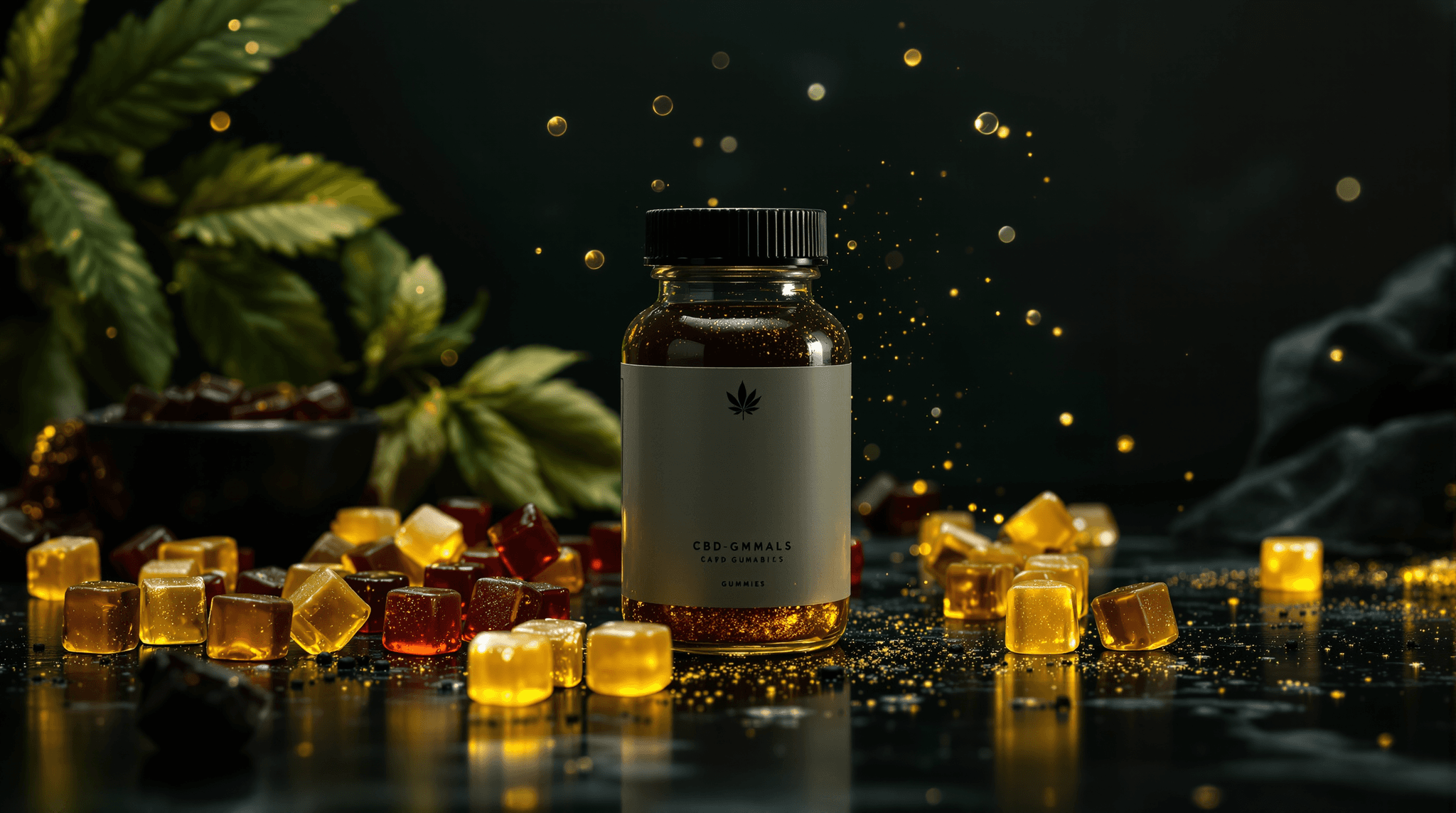
Pick up two gummy packs at the shop and flip them over. One says "full spectrum." The other says "THC isolate" or just "distillate." Same fruity flavor, same 10mg-per-piece label on the front, similar price. So what actually separates them? The answer is on the back — in the ingredient list, the cannabinoid breakdown, and the COA. Once you know what those words point to, you'll never buy a gummy blind again.
Here's the short version before we dig in. Full spectrum gummies are made with an extract that keeps the full range of compounds pulled from the plant — multiple cannabinoids plus the terpenes and plant material that ride along. THC isolate gummies are built from a single, purified compound that's been stripped down to just THC (or just CBD, depending on the product). That's the core of the thc isolate vs full spectrum question, and it changes what you see on the label, how the gummy tastes, and what the COA reports back.
What "full spectrum" actually means on the label
Full spectrum starts with how the extract is made. Growers harvest and dry the flower, then processors run it through extraction — CO2 or a solvent like ethanol — to pull out an oil that carries the plant's whole chemical fingerprint. That oil holds the major cannabinoid (THC or CBD, depending on the source material) alongside minor cannabinoids and the terpenes responsible for aroma. Nothing gets isolated out.
On a full spectrum gummy label, you'll usually see language like "full spectrum cannabis extract" or "whole-plant extract" in the ingredient panel. The cannabinoid breakdown on the COA won't be a single clean number. It'll list a total THC figure, then a scatter of smaller readings — CBD, CBG, CBN, sometimes CBC — each with its own milligram or percentage value. That mixed profile is the signature of full spectrum. If the batch was tested for terpenes, you might also spot names like myrcene, limonene, or caryophyllene on the report.
One trade-off worth knowing: full spectrum extract carries the taste and color of the plant. That earthy, sometimes bitter note is why full spectrum gummies often lean on stronger fruit flavors or a sugar coating to balance the profile. It's not a flaw — it's the plant showing up in the recipe.
What "isolate" means and how it's different
Isolate is the opposite approach. Processors take that first extract and keep refining it — through winterization, distillation, and crystallization — until they're left with a single compound in near-pure form. THC isolate is typically a white or clear crystalline material that's stripped of terpenes, other cannabinoids, and plant matter. It's essentially one molecule, isolated.
That purity shows up on the label. An isolate gummy's ingredient panel might read "THC isolate" or "cannabis distillate" with no mention of whole-plant or full spectrum extract. On the COA, the cannabinoid section tends to be lean: a strong number for the target compound and little to nothing next to the minor cannabinoids. No terpene panel, or one that comes back mostly empty.
Because isolate has almost no flavor or color of its own, it's the go-to for gummies that want a clean, candy-forward taste. The maker controls the flavor completely with added ingredients instead of working around the plant's natural character. If you've had a gummy that tastes exactly like a store-bought fruit chew with no earthy undertone, there's a good chance it was built on isolate.
How to read the two side by side
Say you're holding a full spectrum pack and an isolate pack, both labeled 10mg THC per piece. The front-of-package number can match perfectly. The difference lives in the details:
- Ingredient panel. Look for "full spectrum extract" versus "isolate" or "distillate." This single word tells you the category.
- Cannabinoid breakdown on the COA. Full spectrum shows a spread of cannabinoids. Isolate shows basically one.
- Terpene panel. Full spectrum products may report terpenes. Isolate products usually won't have them at all.
- Color and flavor cues. Full spectrum gummies often have a deeper tint and a more layered taste. Isolate gummies tend to look brighter and taste cleaner.
The milligram math is the same either way. If a pack holds ten gummies at 10mg each, that's 100mg total THC, and the COA should confirm it. Always check that the potency printed on the front matches what the lab reported for that batch. A mismatch — or a missing batch number — is your cue to put it back.
The COA is the receipt
A Certificate of Analysis is the third-party lab report tied to a specific production batch. It's the single most useful document for telling these two product types apart, and for confirming a brand isn't just guessing at what's in the bag.
When you scan the QR code or pull up the COA online, match the batch ID on the report to the one printed on your package. They should be identical. From there, the cannabinoid table shows you the full breakdown. A full spectrum gummy's report reads like a list; an isolate gummy's report reads like a single headline. The COA also covers safety testing — pesticides, residual solvents from extraction, heavy metals, and microbials — which matters no matter which category you buy. A clean pass across those panels is what separates a tested product from a mystery one.
No accessible COA? No batch number to match? That's a hard pass. Third-party testing is the baseline, not a bonus.
A quick note on cannabis edibles history
Edibles are older than the modern dispensary by a long stretch. Infused foods and drinks show up across centuries of cannabis culture, from bhang preparations in South Asia to the brownies that became shorthand for homemade edibles in the American counterculture era. What's changed isn't the idea of eating cannabis — it's the precision.
Early homemade edibles were a guessing game. You had no idea how much of anything ended up in a batch. Today's gummy makers work from measured extracts and confirm the result with lab testing, which is why that per-piece milligram number can be trusted in the first place. The whole point of the full spectrum versus isolate label is that the industry now documents what's inside. That's a big leap from a batch of brownies and a shrug.
At Dr. Greenthumb's, we came up in that culture — B-Real and Cypress Hill were part of the scene long before any of this got standardized. So we take the paperwork seriously. The label and the COA are how we show our work.
What to check before you buy
Start with the ingredient panel to figure out the category — full spectrum extract or isolate. Then pull the COA, match the batch number, and read the cannabinoid breakdown to confirm what the front of the package claims. Full spectrum will show a range of compounds and maybe a terpene list. Isolate will show a single clean number. Neither is "better" as a category — they're different builds for different tastes and preferences, and the right one depends on what you're after in flavor and profile.
The label isn't marketing. It's the fastest way to know exactly what you're putting in the cart. Learn to read it once, and every future gummy run gets easier.
This content is for educational purposes only.


