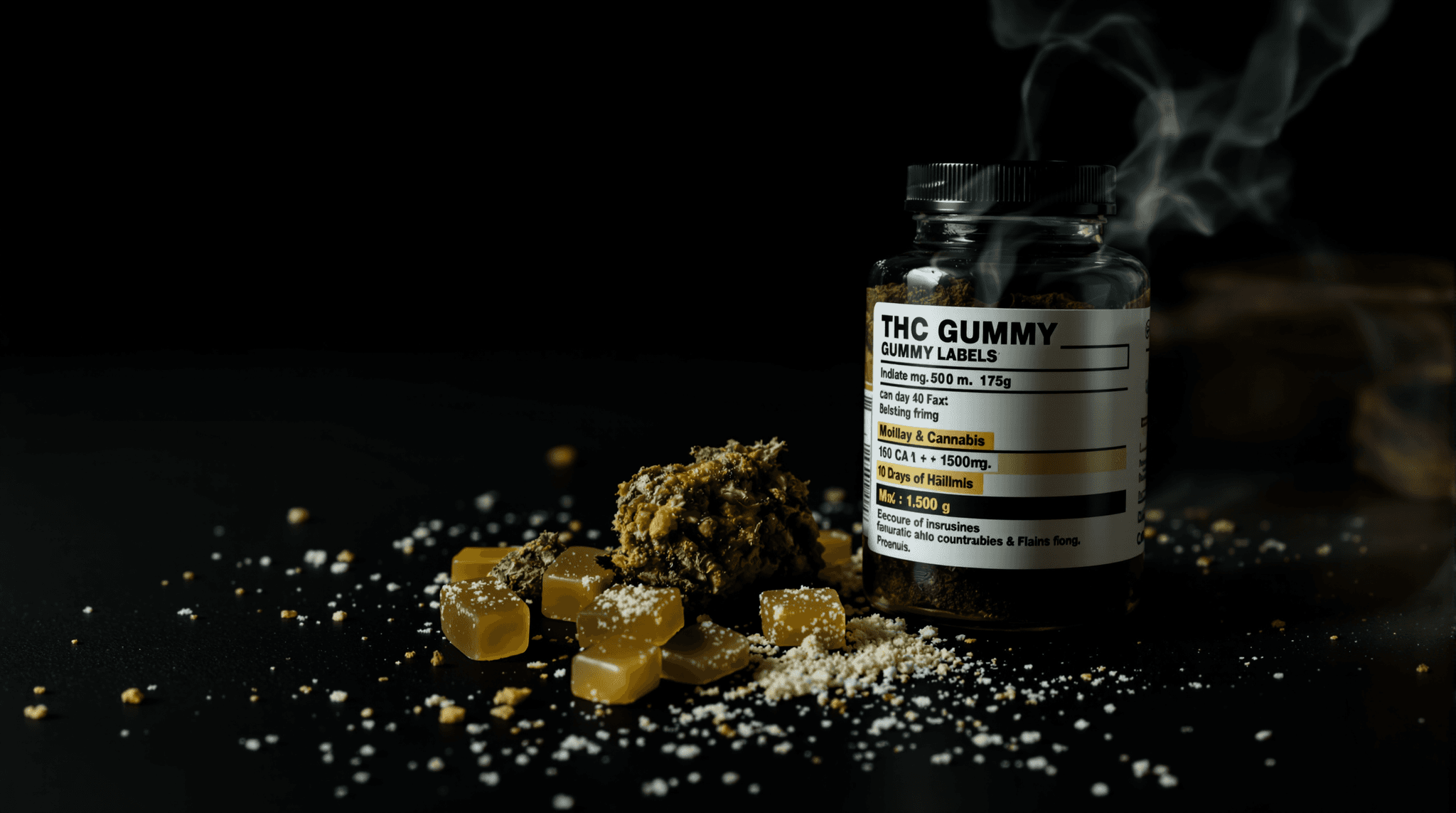
# How to Read a THC Gummy Label: Milligrams, COAs, and Ingredients
You grab a pack of gummies off the shelf, flip it over, and there's a wall of tiny text — milligrams, batch numbers, a QR code, an ingredient list longer than your arm. Most people give it a five-second glance and move on. We get it. But that label is the most honest thing in the room, and once you know how to read it, you'll never shop the same way again.
A THC gummy label isn't there to look pretty. It's a receipt. It tells you exactly what's in the pack, how strong each piece is, and whether somebody outside the company actually checked the work. Let's break down every part of it.
Start With the Milligram Math
The first number people look for on a thc gummy label is potency, and this is where the most confusion lives. There are two numbers that matter, and they are not the same thing.
Milligrams per piece is the dose in a single gummy. Milligrams per package is the total across the whole pack. A label might read "10mg THC per gummy, 100mg per package." That tells you there are ten gummies inside, each carrying 10mg.
So when someone asks how many mg in a gummy, the answer is always on the label — but you have to know which number you're reading. A package that proudly says "100mg" on the front is not a 100mg gummy. It's the total. Read the per-piece number first, every time.
The math is simple once you slow down: total package milligrams divided by the number of pieces equals milligrams per gummy. A 200mg pack with 20 gummies is 10mg each. A 100mg pack with 10 gummies is also 10mg each. Same per-piece strength, different pack size. This is why comparing the front-of-pack number between two brands is a trap — compare per-piece potency and total piece count instead.
State programs set how this gets displayed. In California, for example, the Department of Cannabis Control requires THC and CBD content to be listed in milligrams per package and per serving on the label (cite: California DCC). That standardization is your friend. It means the per-serving number is supposed to be there, plainly, on every legal product.
The COA: Your Proof of What's Inside
Here's the part that separates real brands from the noise. A Certificate of Analysis, or COA, is a lab report from an independent testing facility that breaks down what's actually in the product. The number printed on the box is a claim. The COA is the proof.
Most legit packs carry a QR code or a batch number that links you straight to the COA. Scan it. A real one will show you:
- Cannabinoid potency — the actual measured THC and CBD, confirming the label's milligram claims are accurate.
- Pesticides — screening for chemical residues from cultivation.
- Residual solvents — leftover processing chemicals from extraction.
- Heavy metals — lead, arsenic, cadmium, mercury, which plants can pull from soil.
- Microbials — mold, yeast, and bacteria.
When you open a COA, match three things to the box: the batch or lot number, the product name, and the potency. If the batch number on the COA doesn't match the batch number on the pack, that report could be for an entirely different run. The date matters too — a COA should be recent and tied to that specific production batch.
A quick word on "pass" results. A clean COA shows the contaminant categories marked as pass or below detectable limits. If a brand only shows you potency and hides the contaminant panels, that's a flag. The whole point of third-party testing is that someone with no stake in selling the product confirmed it's clean. State frameworks require this testing before products hit shelves — California, for instance, mandates testing by a licensed third-party lab for cannabinoids and contaminants (cite: California DCC).
Decoding the Ingredient List
Gummies are candy with cannabis in them, and the ingredient list reads like it. You'll see a base of sweeteners and a gelling agent, plus flavor and color. Knowing the building blocks tells you a lot about the product you're holding.
The gelling agent is the big one. Traditional gummies use gelatin, which is animal-derived. Vegan gummies swap in pectin, a fiber that comes from fruit. If a label says "vegan" or lists pectin, that's a plant-based set. Pectin and gelatin also behave differently in texture — pectin tends to give a softer, more fruit-snack chew, while gelatin gives that classic springy bounce.
Sweeteners are usually cane sugar, tapioca syrup, or corn syrup, sometimes with a sugar coating on the outside. Acids like citric acid and malic acid bring the tartness on sour gummies. Colors can be natural — like fruit and vegetable juice or beta-carotene — or synthetic dyes. Neither is hidden; it's all spelled out if you read down the list.
Then there's the cannabis component itself. Labels will note whether the THC comes from distillate (a refined, mostly single-cannabinoid extract) or a full-spectrum or broad-spectrum oil that carries a wider range of compounds from the plant. This is a formulation choice, not a strength claim — it tells you about the character of the extract used, not how it'll hit.
Emulsification: How THC Even Gets Into a Gummy
Cannabis oil and water-based candy don't naturally mix — oil and water never do. That's why good gummy makers use emulsification, a process that breaks the cannabis oil into tiny droplets and distributes them evenly through the batch.
Why you should care: even distribution is what makes the per-piece milligram number trustworthy. If the oil isn't emulsified well, one gummy in the corner of the tray could carry more than the gummy next to it. Consistent dosing across every piece is a sign the manufacturer dialed in their process. A COA confirms the average potency; good emulsification is what keeps each individual piece close to that average.
Storage Details Hiding on the Label
Most people skip the storage line, but it's there for a reason. Gummies are sensitive to heat and light. Heat can melt them into a single fused brick, and prolonged light and air exposure can degrade cannabinoids over time. Labels typically advise a cool, dark spot — not a hot car, not a sunny windowsill.
Check for a manufacture or expiration date too. Gummies don't last forever; texture changes and potency can drift as the product ages. Resealable, child-resistant packaging is also a labeling requirement in most legal markets, and it does double duty keeping the product fresh once opened.
Put It All Together
Next time you're holding a pack, run the checklist. Find the per-piece milligrams, not just the big front number. Scan the COA and match the batch number, then confirm potency and clean contaminant panels. Read the ingredients to know your gelling agent and sweetener base. Note the storage and date.
That's the whole game. A label that gives you all of this isn't burying anything — it's a brand that did the work and wants you to see it. The ones that hide the COA or smudge the per-piece number are telling you something too. Read the receipt. It never lies.
This content is for educational purposes only.


