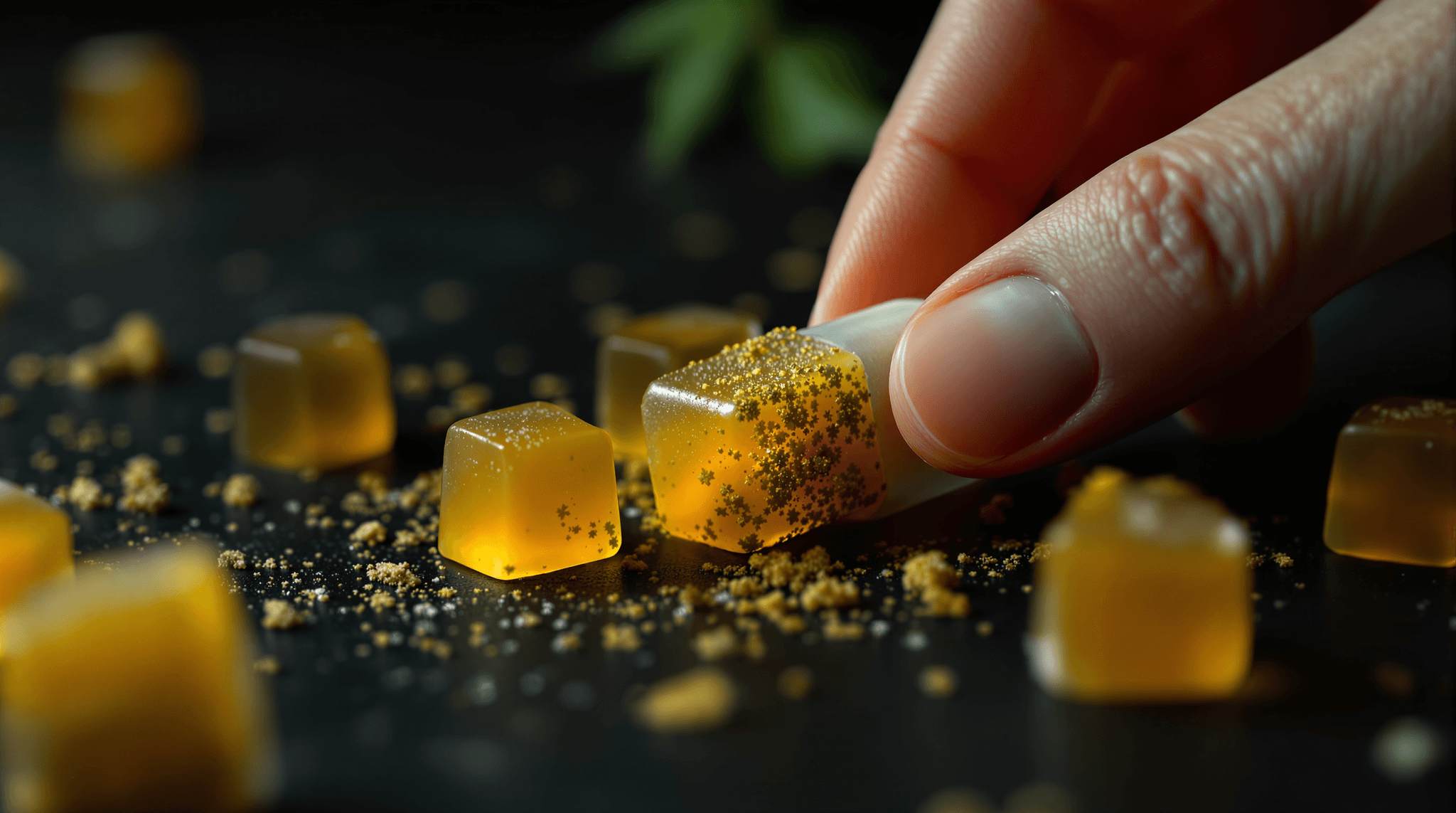
You open the pouch, reach in, and pull out a clump of gummies fused into one sad blob. We've all been there. The good news? That's almost never a sign your gummies went bad — it's a storage story. THC gummies are basically candy with cannabis oil folded in, and candy behaves in predictable ways when you treat it right.
Let's get straight to the answer. To keep THC gummies fresh, store them in their original child-resistant pouch or an airtight container, somewhere cool, dark, and dry — think a cabinet or drawer away from sunlight and heat, ideally between roughly 60–70°F. Keep them sealed between sessions, away from humidity, and out of the freezer unless you're storing them long-term. Do that and a typical gummy holds its texture and flavor for months. Now let's break down why each of those steps matters, and answer the question everyone asks: do THC gummies expire?
What's Actually in a Gummy (and Why It Matters)
Before you can store something well, it helps to know what you're storing. A standard THC gummy is built on a few simple ingredients: a gelling agent (gelatin for traditional gummies, pectin for vegan ones), sugar, corn syrup or another sweetener, citric acid for tartness, flavoring, color, and the cannabis-infused oil or distillate that carries the milligrams of THC.
Most packs you'll find on a shelf are dosed in clear increments — often 5mg or 10mg of THC per piece, with the total per pack printed right on the label. That per-piece number isn't an estimate; it's what the lab confirms on the Certificate of Analysis (COA). When you store gummies properly, you're protecting the texture and flavor — the potency printed on the label reflects the batch as it was tested.
Pectin-based vegan gummies and gelatin-based gummies behave a little differently in storage. Pectin tends to be slightly more sensitive to heat and can get tacky faster, while gelatin gummies can dry out and turn rubbery if left open to air. Knowing which one you've got tells you what to watch for.
The Three Enemies: Heat, Light, and Air
Every storage rule comes back to three things that degrade candy.
Heat. Sugar and gelatin both soften when warm. Leave a pouch in a hot car or on a sunny windowsill and the gummies sweat, stick together, and lose their shape. The infused oil can also separate or migrate inside the piece when things get warm. A consistent room-temperature spot beats a place that swings hot and cold during the day.
Light. Direct sunlight and UV exposure break down cannabinoids over time and can fade flavor and color. This is exactly why most edible packaging is opaque or tinted — it's not just branding. Keep your gummies in a drawer or cabinet, not on the counter where light hits them.
Air and humidity. Once a pouch is open, air and moisture get to work. Humidity makes gummies tacky and encourages that white sugar bloom you sometimes see on the surface. Too little moisture and they dry into hard nubs. The fix is the same either way: reseal tightly and keep them out of damp spots like the area near a sink or a steamy bathroom shelf.
Do THC Gummies Expire?
Here's the question everyone types into search: do THC gummies expire? Yes — like any food product, they have a shelf life, and you should treat the date on the package as real. Most gummies carry a "best by" or expiration date, and many brands list a window in the range of several months to a year or more depending on the formulation and storage. Pectin and gelatin gummies are foods first, so the same logic that applies to any sugar candy applies here.
A couple of things to understand about that date. First, an expiration date is about quality and food safety — texture, flavor, and freshness — not a hard cliff where everything changes overnight. Second, the THC content listed on the label is tied to the batch as tested on its COA; cannabinoids can slowly change over long periods, especially with heat and light exposure, which is one more reason cool and dark storage matters.
Always check the printed date and the batch or lot number on your pack. If a gummy smells off, shows any sign of mold, or has a texture that's wildly different from when you bought it, toss it. When in doubt, throw it out — that rule predates cannabis by a few thousand years.
Step-by-Step: How to Store Edibles the Right Way
Here's the practical playbook for how to store edibles so they last.
- Keep the original packaging when you can. Child-resistant pouches and tinted jars are designed to block light and reseal. They also keep the label, dose info, batch number, and date with the product — which you'll want for reference.
- Reseal after every session. Press the zip closed fully or screw the lid down tight. Squeeze excess air out of resealable pouches before sealing.
- Pick a cool, dark, dry spot. A bedroom drawer, a high cabinet, or a dedicated storage box works great. Aim for steady room temperature, roughly 60–70°F, away from ovens, windows, and electronics that throw off heat.
- Add a desiccant if you live somewhere humid. A food-safe silica gel packet tossed in an airtight container helps fight tackiness and sugar bloom.
- Don't mix flavors and formats in one jar. Gummies pick up flavors and moisture from neighbors. Keep them in their own sealed container.
- Label anything you decant. If you move gummies out of the original pack, write the dose-per-piece and the date on the new container so you never lose track of milligrams.
Fridge or Freezer?
For everyday use, the cabinet wins — a cool, dry, dark spot is all most gummies need, and refrigeration can introduce condensation that makes them sticky when they warm back up.
For long-term storage, the freezer is your friend. Seal gummies in an airtight, freezer-safe container or double-bag them to block moisture, and freeze. When you want some, let them come to room temperature inside the sealed container so condensation forms on the outside, not on your gummies. Frozen properly, texture holds up well past the everyday window. Just remember freezing doesn't reset an expiration date — it slows the clock, it doesn't rewind it.
A Quick Word on Storage and Safety
Keep edibles locked up and clearly out of reach of kids and pets. Gummies look exactly like regular candy — that's the whole point of the format — so the child-resistant packaging exists for a reason. Storing them in their original pouch in a high or locked spot keeps the dose info attached and keeps curious hands out. This is good housekeeping, not a buzzkill.
Read the Label, Trust the COA
The smartest storage habit starts at the shop. Before you buy, check the pack for the milligrams per piece and per pack, the ingredient list (gelatin vs. pectin tells you a lot), the batch or lot number, and the best-by date. Reputable brands back those numbers with a third-party Certificate of Analysis — sometimes via a QR code right on the package — so you can confirm the potency and that the batch was tested for contaminants.
At Dr. Greenthumb's, that label literacy is the move. Know what's in the pack, store it cool and dark, keep it sealed, and your gummies will taste right down to the last piece.
This content is for educational purposes only.


