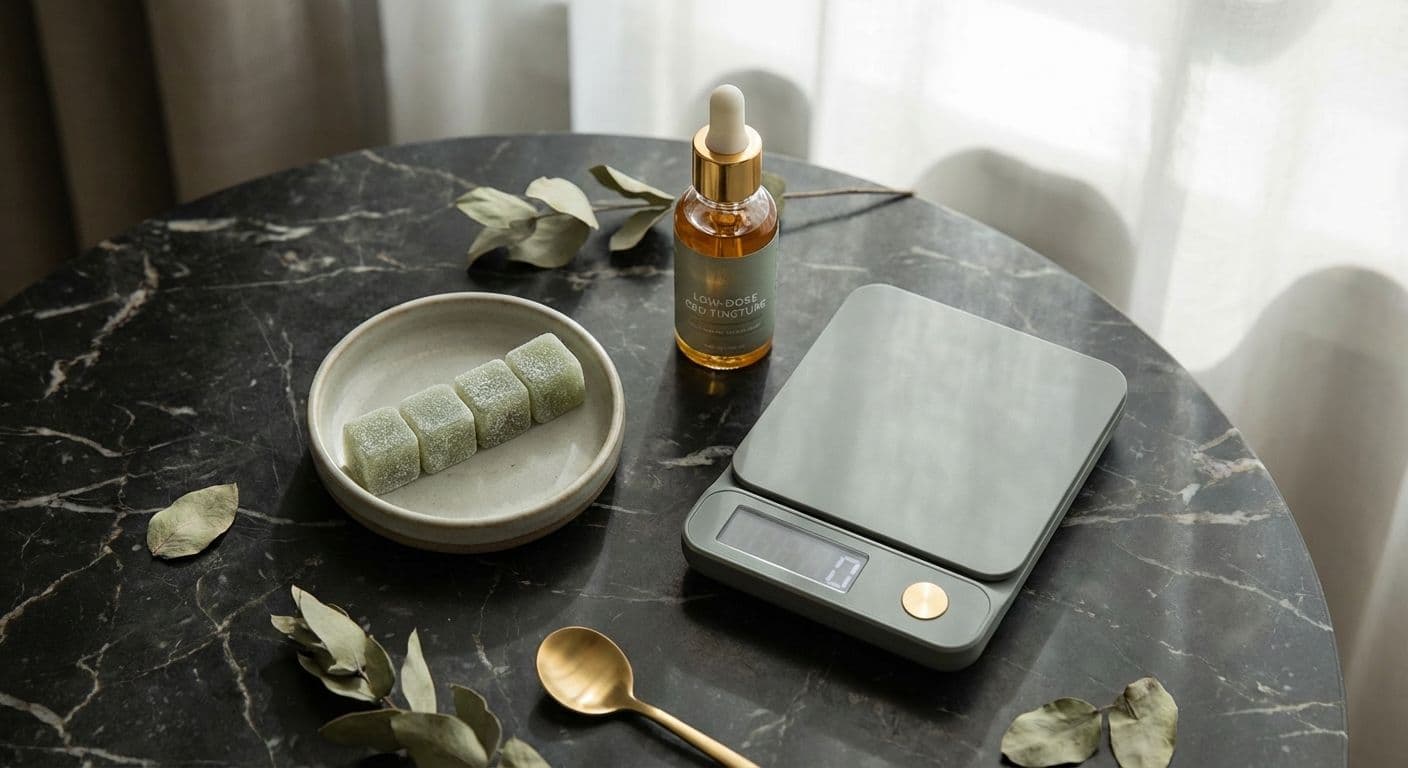
Microdosing Cannabis: Less Is More
Microdosing cannabis means consuming very small amounts — typically 1–5mg of THC — to get subtle benefits without feeling high. The aim is to take the edge off, improve focus, or ease discomfort while staying clear-headed and fully functional.
Why Microdosing Is Growing in Popularity
Traditional cannabis use is often associated with strong, obvious effects: red eyes, couch lock, heavy munchies, and noticeable intoxication. But many modern consumers — professionals, parents, and wellness-focused users — want:
- The benefits of THC
- Without the impairment
A study from the University of Illinois at Chicago found:
- 7.5mg THC: reduced stress in test subjects
- 12.5mg THC: increased anxiety
This supports what microdosers have reported for years: with THC, less can truly be more.
Finding Your Personal Microdose
Your ideal microdose (your "sweet spot") is highly individual. It's influenced by:
- Body weight & metabolism – Larger bodies may need slightly higher doses
- Tolerance level – Regular users may benefit from a tolerance break first
- Consumption method – Edibles, vapes, and tinctures all feel different
- Endocannabinoid system – Everyone's receptors respond differently
A Simple Starter Protocol
Use this as a guideline and adjust based on how you feel:
- Days 1–3: Take 1mg THC
- Check in with yourself at 30 minutes, 1 hour, and 2 hours
- Days 4–6:
- If you felt nothing, increase to 2mg
- If you noticed subtle effects, stay at 1mg
- Day 7+:
- Adjust in 0.5–1mg increments until you find your threshold
Your threshold is the point where you barely notice the effects. That's your microdose. Going above that starts to defeat the purpose.
Best Product Types for Microdosing
Not every cannabis product is designed for precise, low-dose use. These formats make microdosing much easier:
1. Edibles & Gummies
- Very popular and discreet
- Many brands (including options at Dr. Greenthumb's La Mesa and Fresno locations) offer 2.5mg or 5mg gummies
- Easy to split pieces for 1–2.5mg doses
2. Tinctures & Oils
- Taken under the tongue (sublingual)
- Measured droppers allow precise dosing
- Onset: 15–30 minutes (faster than edibles)
- Easy to titrate in small increments
3. Low-Dose Vape Cartridges
- One small puff typically delivers around 1–3mg THC
- Onset is almost immediate, so you can feel your response in real time
- Helpful for people who want quick feedback and fine control
4. Cannabis Beverages
- An emerging, social-friendly category
- Many drinks are 2.5–5mg THC per serving
- Feels similar to having a light drink, but with THC instead of alcohol
What Microdosing Feels Like
At the right dose, the effects are subtle, not overwhelming. Common reports include:
- Mild mood lift – feeling a bit more positive or engaged
- Reduced anxiety – gentle calm without feeling sedated
- Improved focus – easier to stay on task for creative or analytical work
- Physical ease – minor aches and tension feel less noticeable
- Easier sleep onset – when taken 1–2 hours before bed
What it should not feel like:
- Strong euphoria
- Altered perception or time distortion
- Impaired coordination
- Racing thoughts or difficulty concentrating
If you notice those, your dose is too high for microdosing purposes.
Resetting Tolerance for Better Microdosing
If you're a regular or heavy cannabis user, your receptors may be desensitized. A tolerance break can make microdoses effective again.
Practical tolerance reset:
- Minimum: 48 hours of complete abstinence
- Starts to reset CB1 receptors
- Ideal: 5–7 days
- Most people notice a significant drop in tolerance
- After your break:
- Restart with 1mg THC and follow the microdosing protocol
You'll likely find that effects you used to chase with higher doses now appear at much lower amounts.
Microdosing vs. Full-Dose Use
Microdosing isn't meant to replace traditional cannabis use; they're different tools for different jobs.
Microdosing is best for:
- Daytime and functional use
- Work, parenting, or social settings
- Stress management without intoxication
- Subtle mood and focus support
Full-dose use is better for:
- Deep relaxation and unwinding
- Recreation and social sessions
Microdosing for Specific Goals
People microdose for all kinds of reasons, and the beauty of a low-dose approach is that you can tailor it to what you actually need on a given day. Here are some of the most common use cases we see.
Creativity and Focus
Artists, writers, and programmers have been using 2-3mg of THC to slip into a flow state without the scattered thinking that comes with higher doses. It's not about getting high — it's about loosening up the mental filters just enough to let ideas connect in ways they wouldn't otherwise.
B-Real has talked about how low-dose cannabis fuels his studio sessions, keeping the creative channel open without pulling him out of the work. If you've ever felt like a full dose makes you too unfocused to actually finish anything, a microdose might be the sweet spot where inspiration meets execution.
Social Anxiety
A small dose — we're talking 1-2.5mg — can take the edge off social situations without the paranoia that higher doses sometimes bring. It's a subtle shift: conversations feel a little easier, you're a little less in your own head, and the background tension that comes with being around a lot of people dials down a notch.
The key is staying well below the dose where THC starts amplifying anxiety instead of easing it. For a lot of people, that line sits somewhere around 5mg, which is why staying at 2.5mg or under tends to work best for social settings.
Sleep Support
Microdosing THC in the evening, especially when paired with CBN, can help ease you into sleep without that heavy, groggy feeling the next morning. The goal is to stay below the threshold where your body has to metabolize a large amount of THC overnight — usually 2.5-5mg taken about an hour before bed.
CBN adds a gentle sedative quality that complements the THC without stacking the psychoactive effects. People who've tried higher-dose edibles for sleep and woke up feeling like they got hit by a truck often find that less really is more here.
Physical Discomfort and Recovery
Low-dose THC for chronic pain management and inflammation is one of the fastest-growing use cases in cannabis. Athletes and active people are using 2.5-5mg for workout recovery, joint soreness, and the kind of low-grade pain that doesn't warrant heavier interventions but still gets in the way of daily life.
At these doses, you get the anti-inflammatory properties of THC without being couch-locked or mentally checked out. It's functional relief — you can take it and still go about your day, hit the gym, or get work done.
The Entourage Effect at Low Doses
You've probably heard of the entourage effect — the idea that cannabinoids and terpenes work better together than in isolation. What a lot of people don't realize is that this synergy matters just as much at microdose levels, maybe even more.
When you're working with 2.5mg of THC, the supporting cast of minor cannabinoids like CBD, CBN, CBG, and CBC can meaningfully shape the experience. A 2.5mg full-spectrum gummy hits differently than a 2.5mg distillate gummy, and the difference is the entourage.
Full-spectrum products preserve the plant's natural cannabinoid and terpene profile, so even at low doses you're getting a more complete interaction with your endocannabinoid system. Isolate-based products strip everything away except the THC molecule itself, which can feel flatter or more one-dimensional. Neither is wrong — but if you want the most nuanced experience from a microdose, full-spectrum is generally the way to go.
Terpenes play a real role here too. Myrcene, found in mangoes and hops, promotes relaxation and can make a low-dose evening gummy feel more sedating. Limonene (0.4-0.7%), the citrusy terpene in strains like Sour Diesel, tends to elevate mood and pairs well with daytime microdosing. Pinene, which smells exactly like you'd expect, supports alertness and mental clarity — useful if you're microdosing for focus.
When you're choosing a microdose product, checking the terpene profile can help you dial in the specific effect you're after. Our Insane OG consistently shows caryophyllene (1.2-1.8%) dominance, which brings that peppery, grounding quality even at microdose levels.
Microdosing Schedules
There's no single right way to schedule your microdoses. It depends on what you're using them for and how your body responds. Here are three common approaches.
Daily Maintenance
This means taking the same low dose at roughly the same time each day to build a steady baseline in your system. It works well for people managing ongoing anxiety, chronic pain, or general stress. Think of it like a daily supplement rather than a situational tool.
Consistency is what makes this approach effective — your endocannabinoid system responds to regularity, and over time many people find they actually need less to maintain the same level of relief. A typical daily maintenance dose sits around 2-2.5mg, taken in the morning or evening depending on the goal.
As-Needed
Some people prefer to microdose only when a specific situation calls for it — before a social event, a creative session, a tough workout, or a night when sleep isn't coming easy. This keeps your tolerance low since you're not consuming daily, and it lets you match the dose and product type to the moment.
The trade-off is that you don't get the cumulative baseline effect that daily dosing provides. For occasional users, this is often the most practical entry point into microdosing.
Cycling
Cycling means dosing on a schedule with built-in breaks — the most common pattern is five days on, two days off. This may help maintain consistent effects while still allowing for regular use. Dr. Dustin Sulak, a well-known cannabis physician, developed a sensitization protocol along similar lines: you take a 48-hour break from all cannabis, then restart at a very low dose — even lower than your usual microdose — and slowly titrate back up.
Most people find that after the reset, they're more sensitive to THC and need even less to achieve the same effect. It's a good protocol to run every month or two if you're a regular microdoser.
Common Mistakes
Microdosing sounds simple, and it mostly is — but there are a few ways people trip themselves up, especially early on.
Inconsistent Dosing
Switching between products with different potencies or not tracking what you take makes it nearly impossible to find your ideal dose. One brand's 5mg gummy might feel completely different from another's because of differences in cannabinoid profile, bioavailability, and terpene content.
Pick a product, stick with it while you're dialing in, and keep a simple log of dose, time, and how you felt. It doesn't have to be complicated — a note on your phone works fine.
Wrong Product Type
Trying to microdose with flower is a losing game. You can't accurately measure 2mg of THC from a bowl or a joint — there are too many variables in combustion temperature, inhalation depth, and flower potency.
Edibles, tinctures, and pre-measured products like capsules or low-dose mints are built for precision. If you want consistent results, you need a consistent delivery method. Save the flower for when exact dosing isn't the priority.
Not Waiting Long Enough
This is the classic edible mistake, and it happens at microdose levels too. Edibles take 45-90 minutes to kick in — sometimes longer depending on your metabolism and what you've eaten. People take a 2.5mg gummy, feel nothing at 30 minutes, pop another one, and end up at 5mg wondering why it hit so much harder than expected.
Set a timer. Commit to waiting at least 90 minutes before even thinking about a second dose. Patience is genuinely part of the protocol here.
Ignoring Set and Setting
Even at low doses, your environment and mindset shape the experience. A 2.5mg dose taken on a calm Sunday morning with coffee will feel different from the same dose taken right before a stressful meeting.
Cannabis interacts with your nervous system, and if that system is already on high alert, even a microdose can land differently than you'd expect. Pay attention to when and where you're dosing, not just how much.
Starting Too High
Let's be clear: 10mg is not a microdose. In most legal markets, 10mg is considered a standard adult dose. A true microdose is 1-2.5mg — low enough that you shouldn't feel overtly "high."
If you're noticeably impaired, you've gone past the microdose range. Start at 1mg if you're new to cannabis or have low tolerance, and work up from there in 0.5-1mg increments. You can always take more next time. You can't take less after the fact.
Frequently Asked Questions
Can I microdose and drive?
Even at low doses, THC can impair reaction time and spatial awareness. Most cannabis physicians and safety experts recommend against driving after any dose. And the law isn't nuanced about this — in many states, any detectable THC in your system can result in a DUI charge regardless of how small the amount.
Don't risk it. Plan your microdose around your schedule so you're not behind the wheel during the active window.
Will I fail a drug test?
Yes, potentially. Even microdoses introduce THC into your system, and standard drug tests are looking for THC metabolites — not a specific amount. Those metabolites can be detectable in urine for days to weeks depending on frequency of use, body fat percentage, and metabolism.
If you're subject to workplace or athletic drug testing, microdosing still carries real risk. There's no reliable way to guarantee you'll pass a test while actively consuming any amount of THC.
How long until I feel effects?
It depends entirely on the delivery method. Inhaled cannabis — whether smoked or vaped — kicks in within 5-15 minutes. Sublingual tinctures held under the tongue typically take 15-30 minutes. Edibles are the slowest, ranging from 45 minutes to a full 90 minutes depending on your metabolism and stomach contents.
Topicals work locally on pain and inflammation but don't produce psychoactive effects at any dose, so they're not really part of the microdosing conversation.
What's the difference between microdosing THC and CBD?
CBD doesn't produce psychoactive effects at any dose — there's no "high" to calibrate, so the concept of microdosing doesn't really apply the same way. When people talk about microdosing, they're specifically referring to sub-perceptual doses of THC.
That said, combining the two can be powerful. A lot of people find that low THC paired with a moderate amount of CBD — say 2.5mg THC with 10-15mg CBD — creates a balanced, mellow effect where the CBD smooths out any edges from the THC. It's worth experimenting with ratios to find what works for you.
Can I build a tolerance to microdoses?
Yes, but much more slowly than with full doses. Your cannabinoid receptors still downregulate with regular use, it just happens at a more gradual pace when you're only introducing small amounts of THC.
Cycling your doses — five days on, two days off — is one of the most effective ways to keep tolerance in check. If you notice the effects fading even with cycling, a full 48-hour tolerance break usually resets things. Most regular microdosers find that a short break every month or two keeps their doses effective without needing to increase the amount.

