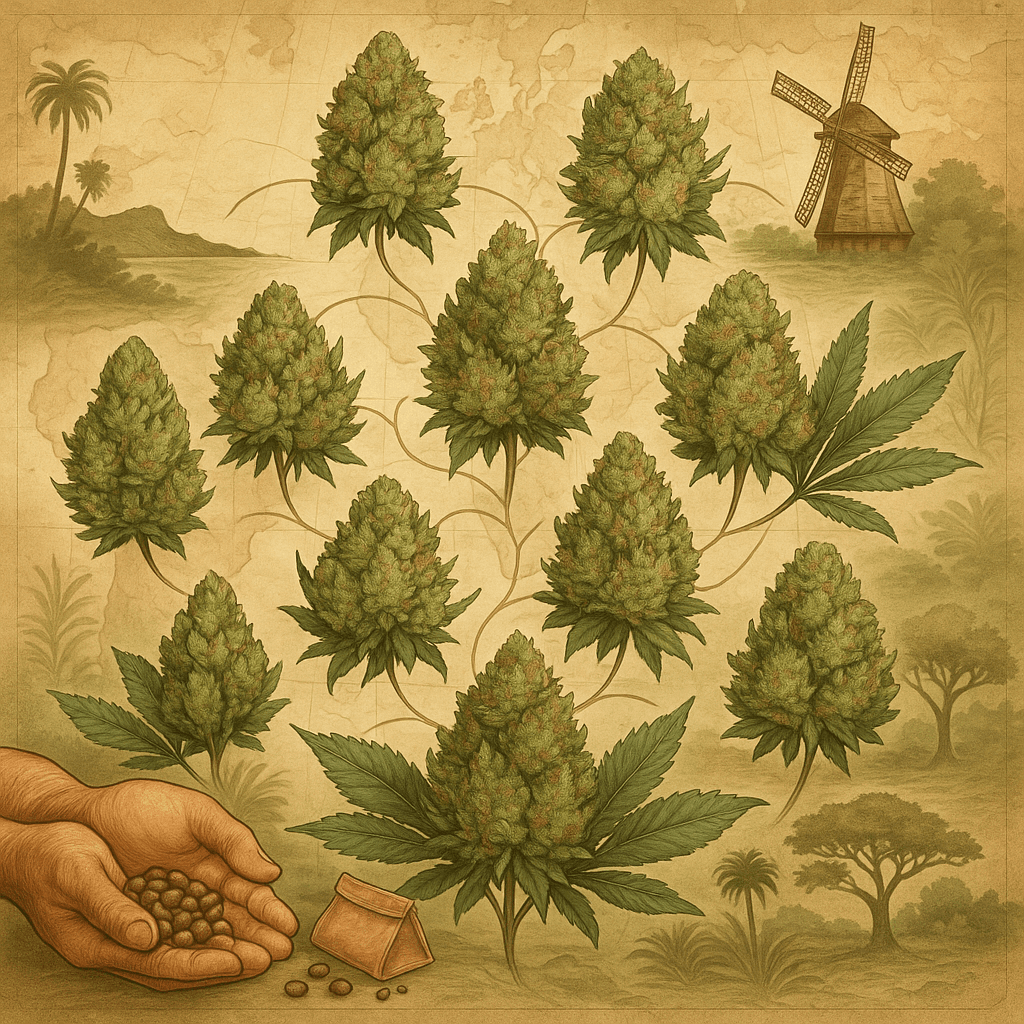
The story of cannabis begins in Central Asia, where archaeological evidence places its first cultivation around 10,000 BCE. But that's just the beginning. Every strain in our La Mesa dispensary today carries DNA from those ancient plants — a genetic chain stretching back millennia.
The Ancient Roots
Ten thousand years ago, while humans were still figuring out agriculture, cannabis grew wild across the mountains of Central Asia. These weren't the 30% THC powerhouses we're breeding today. Early cannabis likely contained modest cannabinoid levels, maybe 3-5% THC at most. But the plant's versatility — fiber for rope, seeds for protein, flowers for medicine — made it invaluable to early civilizations.
Archaeological sites in China and Romania have yielded cannabis pollen dating back 10,000 years. The plant spread along ancient trade routes, adapting to new climates and developing distinct characteristics. What emerged were landrace strains — pure, unhybridized varieties shaped by their environment over thousands of years.
When you smoke our Insane OG at our Fresno location, you're experiencing the culmination of that genetic journey. B-Real has said in interviews that he started growing cannabis in 1988, years before Cypress Hill dropped their first album. "The music and the plant grew up together," he's told interviewers. That connection runs deep — 30 years of breeding expertise distilled into every gram.
Landrace Legends: The Foundation Strains
Before modern breeding programs, cannabis grew wild and free. These landrace strains developed unique terpene profiles and effects tied to their geography. Hindu Kush from the mountains between Afghanistan and Pakistan developed dense, resinous buds to survive harsh conditions. The strain that bears its name today — available at our Canoga Park store — still carries those genetic markers: high levels of myrcene and caryophyllene that produce deep relaxation.
Durban Poison emerged from South Africa's coastal climate. The long growing season and intense sun created a sativa with soaring THC levels and a terpene profile dominated by terpinolene and ocimene. Walk into our Orcutt location and ask about our sativa selection — you'll taste those African genetics in every modern hybrid we carry.
Thai Stick wasn't just a strain — it was a cultural phenomenon. Traditional Thai growers would tie cannabis buds to bamboo sticks, curing them in the tropical humidity. The result? A cerebral high powered by limonene and pinene that influenced every haze variety that followed.
The Great Migration: How Cannabis Spread
Cannabis didn't just spread randomly. It followed human migration patterns, trade routes, and cultural exchanges. By 2000 BCE, the plant had reached Europe and Africa. Hindu texts from 1500 BCE mention "ganja" as one of five sacred plants. The Scythians were burning cannabis in funeral ceremonies around 500 BCE — archaeology confirms this with ornate gold vessels containing cannabis residue.
Each new region shaped the plant differently. Mediterranean climates produced plants with high levels of pinene and linalool. Northern European varieties developed faster flowering times to beat early frosts, traits we still see in modern autoflowering genetics.
Modern Breeding: Where Science Meets Art
The cannabis you'll find at our South Holland store represents generations of selective breeding. Take our Insane OG — this isn't just another OG Kush cut. Our cultivation team has been refining this phenotype for years, selecting for specific terpene ratios and consistent THC levels.
Our last batch tested at 31.2% THC with a terpene profile that tells a story: 0.8% caryophyllene provides the spicy backbone, 0.6% limonene adds citrus brightness, and 0.4% myrcene delivers the relaxing body effects OG is known for. Those aren't random numbers — they're the result of careful phenotype selection and optimal growing conditions.
The OG Mystery: America's Favorite Strain
No strain has generated more debate about its origins than OG Kush. The most accepted story traces it to a bag seed grown in Florida in the early 1990s by a grower known as Matt "Bubba" Berger. The cut made its way to Los Angeles, where it was crossed with a Hindu Kush plant.
But here's where it gets interesting. Our cultivation team has worked directly with original OG cuts, and the genetic diversity is remarkable. True OG Kush carries Chemdawg genetics mixed with landrace indica — probably Pakistani or Afghani lines. The result? A strain that consistently delivers 22-28% THC with that distinctive fuel aroma from high levels of caryophyllene and limonene.
When customers ask our budtenders about OG's effects, we always mention the terpenes. Caryophyllene activates CB2 receptors, potentially reducing inflammation. Limonene might elevate mood. Myrcene could enhance relaxation. We can't make medical claims, but the science behind terpene interactions is fascinating.
Modern Genetics: The New Landrace
Today's breeding programs are creating what some call "modern landraces" — strains so stable and distinct they're becoming genetic foundations for future crosses. Our Insane OG falls into this category. After years of selection, it breeds true — meaning its offspring consistently display the parent's characteristics.
Our Fresno store keeps detailed records of every batch. THC levels stay consistent between 28-32%. Terpene profiles remain stable. That's not luck — it's the result of maintaining pure mother plants and rigorous quality control.
The Science of Selection
Modern breeders don't just cross plants and hope for the best. They're using genetic markers, terpene analysis, and cannabinoid profiling to guide selections. At Dr. Greenthumb's, we test every batch for potency and terpenes. Our recent Insane OG harvest showed:
- THC: 30.8%
- CBD: 0.3%
- CBG: 1.2%
- Total terpenes: 2.4%
That terpene percentage puts it in the top tier of aromatic strains. The dominant terpenes — caryophyllene, limonene, and myrcene — create the complex aroma and effects profile our customers expect.
From Seed to Sale: The Modern Journey
The path from ancient landrace to modern dispensary shelf is remarkable. Our cultivation team starts with genetics that trace back thousands of years, then applies modern growing techniques to maximize potential. Climate-controlled environments, precise nutrient regimens, and careful curing processes ensure every gram meets our standards.
When you walk into our La Mesa location, you're seeing the end result of that journey. Each jar on our shelves contains cannabis that connects directly to those ancient Central Asian plants. The DNA hasn't changed much — we've just learned how to express it better.
The Future of Cannabis Genetics
Genetic preservation is crucial. As commercial breeding focuses on high-THC strains, we risk losing genetic diversity. That's why many cultivators maintain landrace genetics — pure lines that haven't been crossed with modern hybrids.
Our breeding program includes several landrace-derived plants. They might not hit 30% THC, but they carry genetic traits that could prove invaluable for future breeding projects. Disease resistance, unique terpene profiles, or adaptation to specific growing conditions — these traits live in landrace genetics.
The Cypress Hill Connection
B-Real's involvement isn't just marketing — it's genetic curation. His experience spans three decades of cannabis cultivation, from prohibition-era growing to today's legal market. That knowledge influences every strain decision at Dr. Greenthumb's.
The Insane OG story starts in B-Real's personal garden. Years of selection for potency, flavor, and consistency created a strain that stands apart. Now, customers at our Orcutt and Canoga Park locations can experience that same genetics.
Where We're Headed
Cannabis genetics continue evolving. New breeding techniques like tissue culture and genetic mapping are accelerating development. But the foundation remains those ancient landrace strains — genetic libraries preserved in remote mountains and valleys.
Every puff connects you to that history. The relaxing effects of myrcene, the uplifting properties of limonene, the spicy bite of caryophyllene — these molecules have been interacting with human endocannabinoid systems for millennia.
The story that began 10,000 years ago continues today in our cultivation rooms and dispensary shelves. From Central Asian hillsides to your local Dr. Greenthumb's location, cannabis has been humanity's companion through the entire journey. And we're just getting started.


