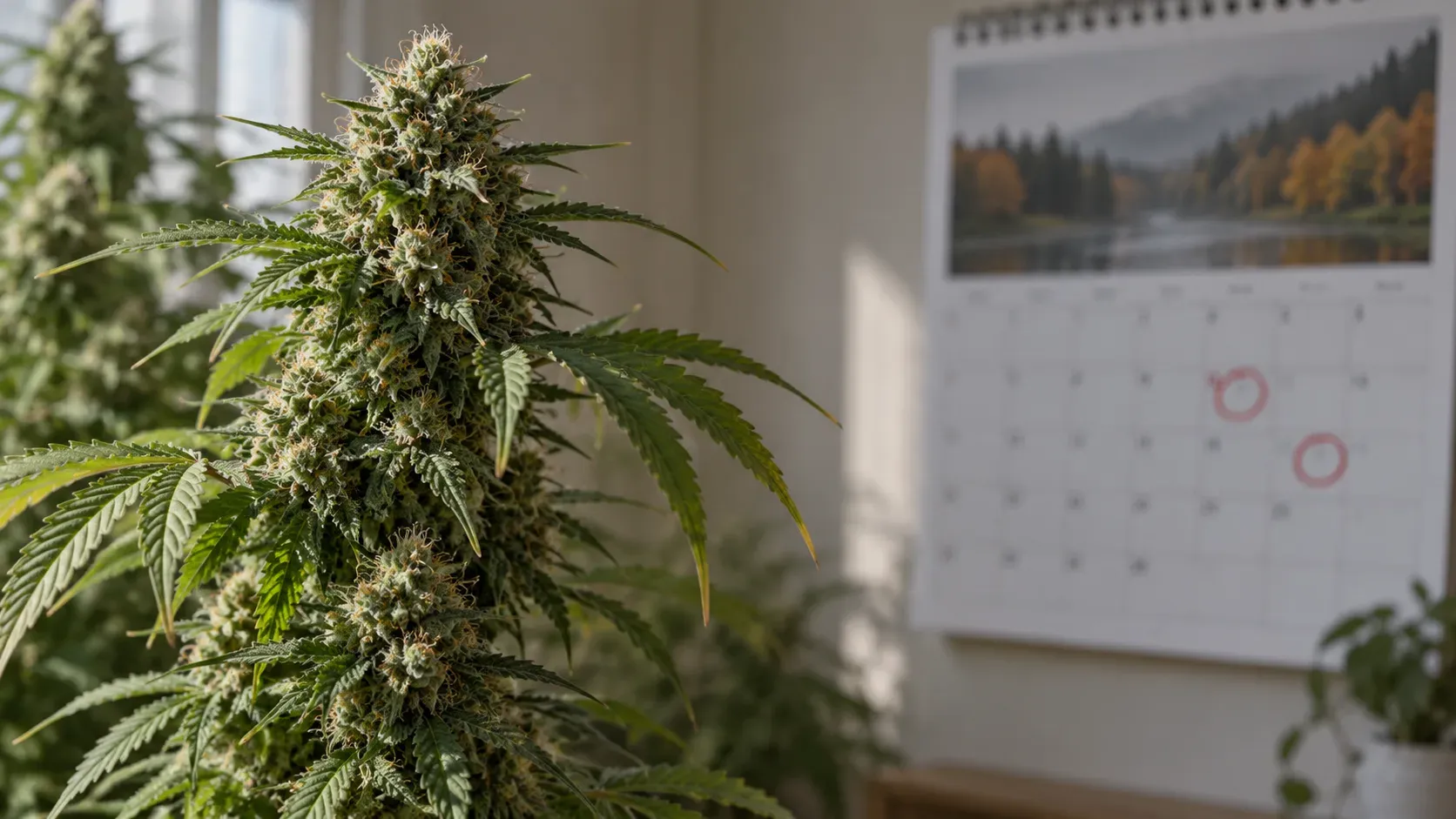
If you have been trying to work out when the federal hemp law actually changes, the answer got more complicated at the start of September.
There are now two dates, not one.
November 12, 2026 — intermediate and finished hemp products containing cannabinoids the cannabis plant cannot naturally produce lose federal hemp status. In practice that means most synthetic and converted cannabinoids.
December 11, 2026 — everything else. The total-THC standard, the 0.4 milligram per-container cap, and the exclusion for naturally occurring cannabinoids that were made outside the plant.
Until December 10, the old 0.3% delta-9 standard from the 2018 Farm Bill is still the federal rule.
Why the date moved
In November 2025, Congress rewrote the federal definition of hemp. Section 781 of Public Law 119-37 amended 7 U.S.C. §1639o, the definition the 2018 Farm Bill created, and gave the change a one-year runway. That put it on November 12, 2026.
That is the date almost everything written about this law refers to, because until very recently it was correct.
On September 2, 2026, the President signed H.R. 6500, the Continuing Appropriations and Extensions Act, 2027. The White House confirmed the signature the same day. Buried in that bill is Section 2019, which does not repeal anything. It temporarily limits which parts of Section 781 apply between November 12 and December 11.
The result is the split above. Roughly four extra weeks for most of it, and no extra time at all for truly synthetic cannabinoids.
One consequence worth knowing if you go looking yourself: the official U.S. Code text has not caught up. It still shows the original 365-day effective date with no reference to the delay. If you check the statute and see November 12 with no mention of December, that is a publishing lag, not evidence the date held.
What the new definition actually says
Three changes matter.
Total THC replaces delta-9. The old rule measured only delta-9 THC. The new one measures total tetrahydrocannabinols and names THCA explicitly. Raw cannabis is mostly THCA, which converts to delta-9 when heated — which is why THCA flower could test under 0.3% delta-9 while behaving like any other cannabis when smoked. The threshold stays at 0.3% on a dry weight basis. The arithmetic changes.

A cap per container, not per serving. A finished hemp-derived cannabinoid product falls outside the definition if it holds more than 0.4 milligrams combined total of THC and similar-effect cannabinoids per container. The statute defines "container" as the innermost wrapping in direct contact with the product — the jar, bottle, bag, packet or cartridge — and excludes bulk shipping boxes. A single conventional 10mg gummy is many times that limit on its own.
Made outside the plant is out. Two separate exclusions. Cannabinoids the plant cannot naturally produce are excluded, and so are cannabinoids that can occur naturally but were synthesized or manufactured outside it. The first is what lands on November 12. The second waits until December 11.
The U.S. Hemp Roundtable, an industry trade group, estimates the change reaches about 95% of hemp-derived cannabinoid products currently sold. That figure comes from a group campaigning against the law, so treat it as a directional claim rather than a measurement — but no one on either side is arguing the reach is small.
If the difference between hemp and cannabis is the part that keeps tripping you up, we wrote a longer explanation of what separates hemp from marijuana.
The FDA never published the lists
Section 781 told the FDA to publish, within 90 days, a list of the cannabinoids the plant naturally produces, a list of the THC-class ones among them, a list of other cannabinoids with similar effects, and further detail on what counts as a container.
That deadline fell in February 2026. As of early September, none of it has appeared. The Congressional Research Service noted the absence in its own analysis.
This is not a footnote. The line between "capable of being naturally produced" and "not capable" is the line that decides which date a product falls on, and the agency responsible for drawing it has not drawn it.
California already did this
If you shop at a licensed dispensary in California, most of the practical change happened over a year ago.
The California Department of Public Health issued emergency regulations in September 2024 barring hemp food, beverages and dietary products with any detectable THC, and restricting sales to 21 and over. The Department of Alcoholic Beverage Control runs the enforcement side and publishes a running tally: as of its August 23, 2026 update, 23,559 location visits and 158 violations since October 2024. Recent months show zero violations across hundreds of visits.
AB 8, signed in October 2025, turned that into permanent law. From January 1, 2026 hemp flower, hemp prerolls and inhalable hemp products containing THC are off California retail shelves entirely. Hemp food, beverages and supplements may use only CBD or CBN isolate at high purity with no THC and no synthetics. AB 8 also routes intoxicating cannabinoid products into the licensed cannabis system starting in 2028.
The important nuance: THCA flower is not banned in California. The hemp retail channel for it is. It remains available through DCC-licensed dispensaries as cannabis, subject to testing, child-resistant packaging, labeling and 21-plus rules.
Illinois kept November 12 — even though the federal date moved
This is the part almost nobody has right, and it matters if you are in Chicago.
Illinois passed its own hemp law before the federal delay existed. Public Act 104-0463, signed June 12, 2026, creates the Illinois Hemp Act and repeals the old Industrial Hemp Act on November 12, 2026.
The Illinois Department of Agriculture's informational bulletin sets out the new state definition in full. It is the same shape as the federal one: total THC including THCA at 0.3% dry weight, the 0.4 milligram per-container limit, exclusions for cannabinoids not naturally produced by the plant and for ones synthesized outside it. Section 15 of the Act names delta-8 THC, THC-P, HHC and THC-O as similar-effect cannabinoids.
Illinois wrote all of that into its own statute with its own date. It did not cross-reference the federal effective date. So the September stopgap that moved Washington's clock to December 11 does not move Springfield's. In Illinois, November 12 stands.
Some of the law is already live. Since June, any cannabinoid product over 0.4 milligrams of THC or similar-effect cannabinoids can only be sold to people 21 and over, with age verification for anyone who looks under 30, and every hemp product must carry a full label with cannabinoid content in milligrams.
From November 12, finished hemp products sold in Illinois also cannot contain alcohol, tobacco or nicotine, cannot be intended for smoking or vaping, must be prepackaged, and must be lab tested with a certificate of analysis reachable from the label.
If you want the current Illinois purchase rules for licensed cannabis, which the same law also changed, we covered how much you can buy in Chicago.
What this does not change
Nothing on a licensed dispensary shelf is hemp.

That sounds like a technicality and it is the whole point. Products sold by a state-licensed cannabis retailer are regulated as cannabis — by the Department of Cannabis Control in California and under the Cannabis Regulation and Tax Act in Illinois. They were never sold under the hemp definition, so redefining hemp does not reach them.
Federally, licensed cannabis has been in a different position all along. The hemp definition is what carved hemp out of the Controlled Substances Act. State-licensed cannabis was never inside that carve-out. Its federal status on December 12 is the same as it was on December 10.
The products this law reaches are the ones sold outside the licensed system: delta-8 and HHC at smoke shops, THCA flower shipped by mail, high-dose hemp beverages, gas-station gummies. Both of our states had already decided those belong in licensed stores. The federal law is arriving at the same conclusion.
For what it is worth, the practical consumer difference between the two channels was never mainly legal. It is that one is tested, dosed and labeled under a regulator, and one is not. If you have ever wondered how to tell, here is what a real license looks like.
What could still change
December 11 is not only the hemp date. It is also the day government funding runs out under the same bill that created it.
That makes the next funding fight the obvious vehicle for another change, and several proposals are already sitting in committee. The Hemp Planting Predictability Act (H.R. 7024) and its Senate companion (S. 3686) would push the effective date to 2028. The American Hemp Protection Act (H.R. 6209) would strike the provision and restore the 2018 definition. Representative Andy Barr's Lawful Hemp Protection Act would replace prohibition with a regulatory framework. As of early September none has advanced past committee.
So treat December 11 as the current date rather than a settled one. The underlying law has not been repealed, weakened or reinterpreted — it has been postponed by 29 days, once.


