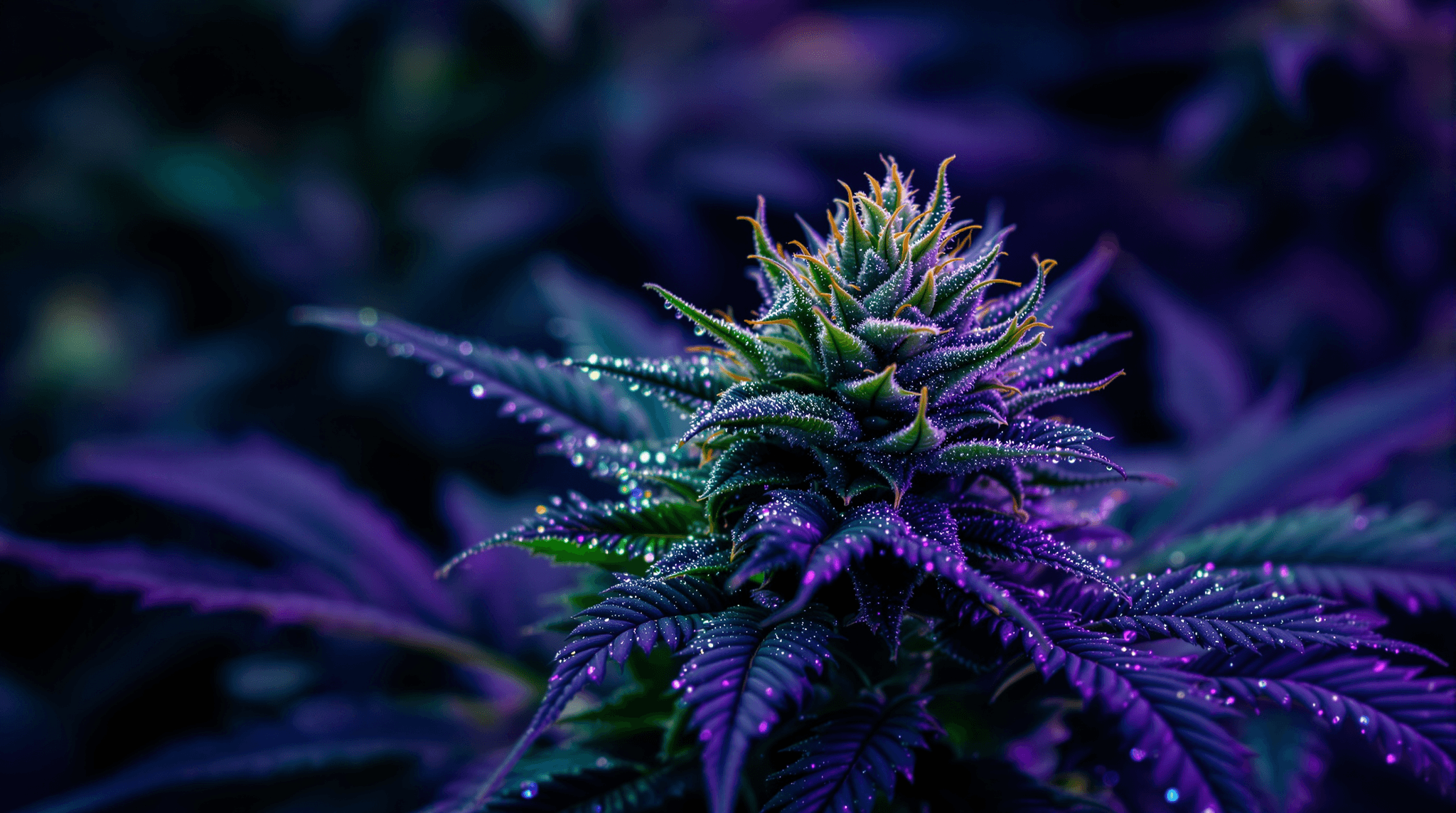
The single biggest fork in the road when you start a grow is whether your plant flowers on a clock you set or on a clock built into its own genetics. That's the real split between photoperiod and autoflower. A photoperiod plant waits for you to shorten its daily light before it starts making buds. An autoflower doesn't wait for anything — it flips to flower on its own schedule, usually a few weeks after it breaks the soil, no matter how many hours of light you're giving it.
That one difference ripples through everything else: how long the grow runs, how much room you have to fix mistakes, how you feed, and how you train the plant. Neither grow style is "better." They're built for different situations. If you understand what each plant is doing at each stage, you can pick the one that fits your space, your patience, and how hands-on you want to be. Let's walk through both.
How a photoperiod plant reads the light
A photoperiod plant tracks the length of its dark period to decide when to flower. Outdoors, this is what makes cannabis a fall plant — as summer nights get longer, the plant senses the change and shifts from growing leaves to building flowers. Indoors, you're the season. You run a long-day light cycle to keep it in vegetative growth, then switch to a shorter day to trigger flowering.
The common indoor approach is 18 hours of light and 6 of dark during veg, then flipping to 12 and 12 to start flower. That flip is the moment you're in control of. Keep the plant on a veg cycle and it'll stay in vegetative growth for as long as you let it — weeks, or longer if you want a bigger plant. That's the real advantage here: you decide when the plant is big enough to flower.
During the flowering stretch, watch for the plant roughly doubling in height in the first couple of weeks, then settling in to pack on flower. Light discipline matters more now. Light leaking into the dark period can confuse a photoperiod plant and disrupt flowering, so a genuinely dark dark-period is part of the job.
How an autoflower runs its own clock
An autoflower ignores the light schedule entirely when it comes to flowering. Its genetics carry ruderalis heritage — a cannabis type from far-northern latitudes where summers are short and the plant couldn't afford to wait for shortening days. So it flowers based on age, typically starting the transition a few weeks from germination regardless of whether it's getting 18 or 20 or even 24 hours of light.
That changes the grower's whole rhythm. You don't flip anything. The plant vegetates briefly, then starts flowering on its own, and the entire run from seed to harvest tends to be short. Many growers run autoflowers under a long light cycle the whole way through — something like 18 to 20 hours a day from start to finish — because there's no dark-period trigger to protect.
The trade-off is time to react. With a photoperiod plant you can hold it in veg an extra two weeks to recover from a rough start. An autoflower won't give you that grace. It's on its own timeline, and if it hits a stressful stretch during its short veg window, you can't extend the runway. What you see is what you get. That makes early care — clean medium, steady environment, gentle handling — more important, because there's less time to correct course.
Stages look the same, timelines don't
Both grow styles move through the same recognizable stages, and the observable traits are similar. A seedling shows its first round cotyledon leaves, then its first true serrated leaves. Vegetative growth is the leafy, stretching phase where the plant builds the frame that'll hold flowers. Flowering is where you see pistils, then developing bud sites, then swelling and resin.
What differs is the calendar and how much of it you steer. A photoperiod veg phase is open-ended — you hold the plant there as long as you want. An autoflower veg phase is short and fixed by genetics. Because of that, autoflowers are often smaller plants, which can be a plus in tight spaces and a limit if you were hoping for a large canopy.
One practical consequence: training. Growers who train photoperiod plants — bending and tying branches to open up the canopy — have plenty of veg time to let the plant recover between sessions. With autoflowers, heavy training can eat into the short window the plant has to build structure, so many growers keep training light and low-stress, if they do it at all. This isn't a rule so much as a reflection of how little time the plant has.
Environment and feeding across both styles
The environmental variables you watch are the same for both: temperature, humidity, airflow, and light intensity. Seedlings and early veg generally like warmer, more humid conditions; as the plant matures into flower, many growers bring humidity down and keep air moving to reduce the risk of mold on dense buds. Airflow does double duty — it strengthens stems and keeps the canopy from sitting in stagnant, damp pockets.
Substrate choice — whether you're in soil, a soilless mix like coco, or another medium — works for either grow style. The difference again is timing. A photoperiod grow gives you a longer feeding arc, so you have time to read the plant, adjust, and dial in a feeding routine over many weeks. Autoflowers move fast, so growers often feed lighter and watch closely, since a nutrient problem that shows up late has less time to be corrected before harvest.
Sanitation matters regardless of style. Clean tools, clean medium, and keeping pests out of the space are basic practices that protect any grow. With autoflowers the stakes on prevention are a little higher simply because there's less time to nurse a plant back after a setback.
Which grow style fits you
Go photoperiod if you want control and don't mind a longer grow. You decide plant size, you decide when to flower, and you have room to train, recover from mistakes, and take cuttings for clones if that's your thing. It rewards patience and attention to the light schedule.
Go autoflower if you want a shorter, more hands-off run and you're working in a space where a compact plant and a consistent long light cycle are easier to manage. The plant makes the flowering decision for you, which is either freeing or frustrating depending on how much you like being in charge. Some growers keep separate tents — one on a veg-length day, one on flowering hours — and autoflowers sidestep that by not needing a schedule change at all.
Plenty of growers run both over time. Autoflowers can be a good way to learn the stages quickly because you cycle through a full grow fast. Photoperiods let you go deeper on training and long-term plant management once you've got the basics down.
Whatever you choose, remember that cultivation is legal only where local law allows — check the rules in your jurisdiction before you plant anything.
What to watch and record next
Start a simple grow log with dates. Write down your germination date — for an autoflower this is your countdown clock, since flowering will start on age, not on anything you do. For a photoperiod plant, log the date you flip to a shorter day; that's your flowering start marker.
From there, note your daily light hours, your temperature and humidity readings, and any changes you make to feeding. As flowers mature on either grow style, the observation most growers rely on is the trichomes — checking under magnification as the resin heads shift from clear to cloudy to amber to judge ripeness. Log what you see each time you check. Those dated notes are what turn one grow into a repeatable process, so your next round starts smarter than this one did.
This content is for educational purposes only.


