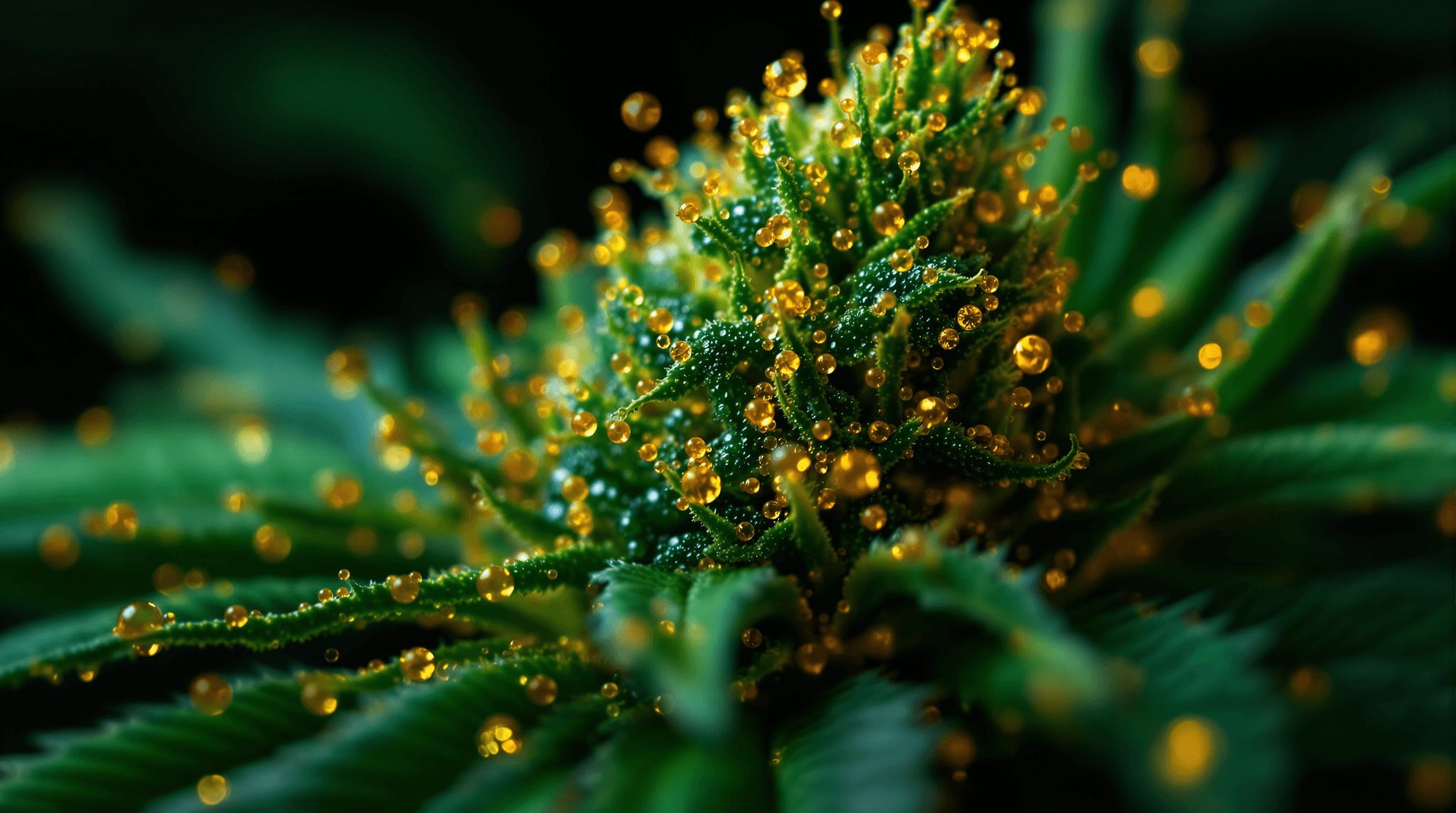
Grab a loupe, get close to a flower, and look at the frosty coating on the buds. Those tiny stalked structures topped with a little bulb are trichomes, and they're the single best signal a grower has for harvest timing. When you're deciding when to harvest, you're really reading the color of those bulbous heads — clear, cloudy, or amber. That color shift tells you where the plant is in its ripening curve, and it's more reliable than counting weeks on a calendar or trusting a breeder's estimated flowering window.
Here's the short version before we dig in. Trichome heads start out clear and glassy. As the plant matures, they turn milky or cloudy. Push further and some heads shade toward amber. Most growers watch for the transition from mostly-clear to mostly-cloudy as the plant approaches its peak, then decide how much amber they want to see before cutting. That's the whole game — but the details of how you look, what you're looking at, and what else the plant is telling you are where good timing comes from.
What trichomes actually are
Trichomes are the resin glands that coat mature cannabis flowers, sugar leaves, and sometimes the surrounding foliage. The type you care most about for harvest timing is the capitate-stalked trichome — a stalk with a round, sticky head sitting on top. Under magnification these look like tiny mushrooms or glass pins. Glandular trichomes are the primary sites where the plant produces and stores its cannabinoids and terpenes. That's why their appearance tracks so closely with maturity: as the plant finishes its life cycle, those glands fill, mature, and eventually begin to degrade.
You can't judge any of this with the naked eye. You need magnification — a jeweler's loupe (30x to 60x is common), a cheap USB microscope, or a phone macro lens. Focus on the trichome heads, not the stalks, and look at the flower itself rather than the sugar leaves, since leaf trichomes tend to mature ahead of the ones on the buds.
Reading the color
The color progression is the core skill. Walk it in three stages.
Clear. Early in flowering, the heads are transparent and glassy. When most of what you see is clear, the plant is still building. Cut now and you've stopped the process before the glands finished maturing.
Cloudy (milky). As things ripen, the heads turn opaque — a milky, frosted white. This is the stage most growers center their harvest window around. A canopy dominated by cloudy heads generally signals the plant is at or near its peak ripeness.
Amber. Some heads then shift to a golden or amber tone. Amber tells you those particular glands have matured fully and are starting to change. How much amber you allow before cutting is a stylistic choice that varies grower to grower — some pull at the first sign, others wait for a meaningful percentage of amber across the buds.
Because a single plant ripens unevenly — top colas usually finish ahead of lower, shaded buds — check several spots. Don't judge the whole plant off one flower catching the light.
Why the calendar isn't enough
Breeders publish flowering times, and they're a useful starting point. But a plant's actual pace depends on its genetics, the light it got, its temperature and humidity, how it was fed, and plain individual variation. Two plants of the same cultivar in the same room can finish days apart. That's exactly why growers lean on the trichomes rather than the date — the plant reports its own readiness if you know how to read it.
The practical move is to start checking early and check often. Once buds have fattened and the earliest heads start turning cloudy, begin looking every day or two. Ripeness can move quickly in the final stretch, and the difference between a canopy you're happy with and one that's drifted past your target can be a matter of days.
The rest of the plant is talking too
Trichomes are the headline, but they're not the only signal, and reading them alongside the whole plant makes your timing sharper.
Watch the pistils — the little hairs emerging from the buds. Early on they're white and stick straight out. As flowering winds down, more of them darken to orange, brown, or rust and curl inward. Pistils alone are a rough guide (they respond to things other than maturity), but a flower that's still throwing lots of fresh white pistils usually isn't done.
Look at the fan leaves too. Late in the cycle, as the plant redirects its resources, you'll often see the larger leaves fading, yellowing, and dropping. Bud structure tightens and swells. None of these replace the trichome check — they frame it. When the pistils have mostly darkened, the leaves are fading, and the trichome heads have gone cloudy, those signals are pointing the same direction.
Keep a log
Harvest timing gets easier every cycle if you write things down. Note the date you flipped to flowering, the date you first spotted cloudy heads, and the date you cut. Snap dated photos through your loupe or scope so you can compare this run to the last one. Over a few grows you'll learn how a specific cultivar behaves in your specific space — how long it typically runs, how fast it moves from cloudy to amber, which plants finish first.
That record is what turns guesswork into a repeatable read. A grower who logged that a plant hit mostly-cloudy 63 days after the flip last time has a real reference point for this time, instead of squinting and hoping.
A quick, repeatable routine
- Start loupe checks once buds have swelled and pistils begin to darken.
- Look at flower trichomes, not sugar-leaf trichomes.
- Check multiple spots and heights — tops ripen before bottoms.
- Track the ratio of clear to cloudy to amber heads over successive days.
- Log dates and photos so each grow informs the next.
Remember that cultivation is legal only where local law allows — check the rules in your own jurisdiction before you grow anything.
The next thing to watch is the pace of that color shift. Once you're seeing a canopy that's mostly cloudy, look every day and record what percentage of amber is showing up. That daily read — cloudy holding steady, amber slowly climbing — is what puts you in position to cut on your terms instead of the plant's.
This content is for educational purposes only.


