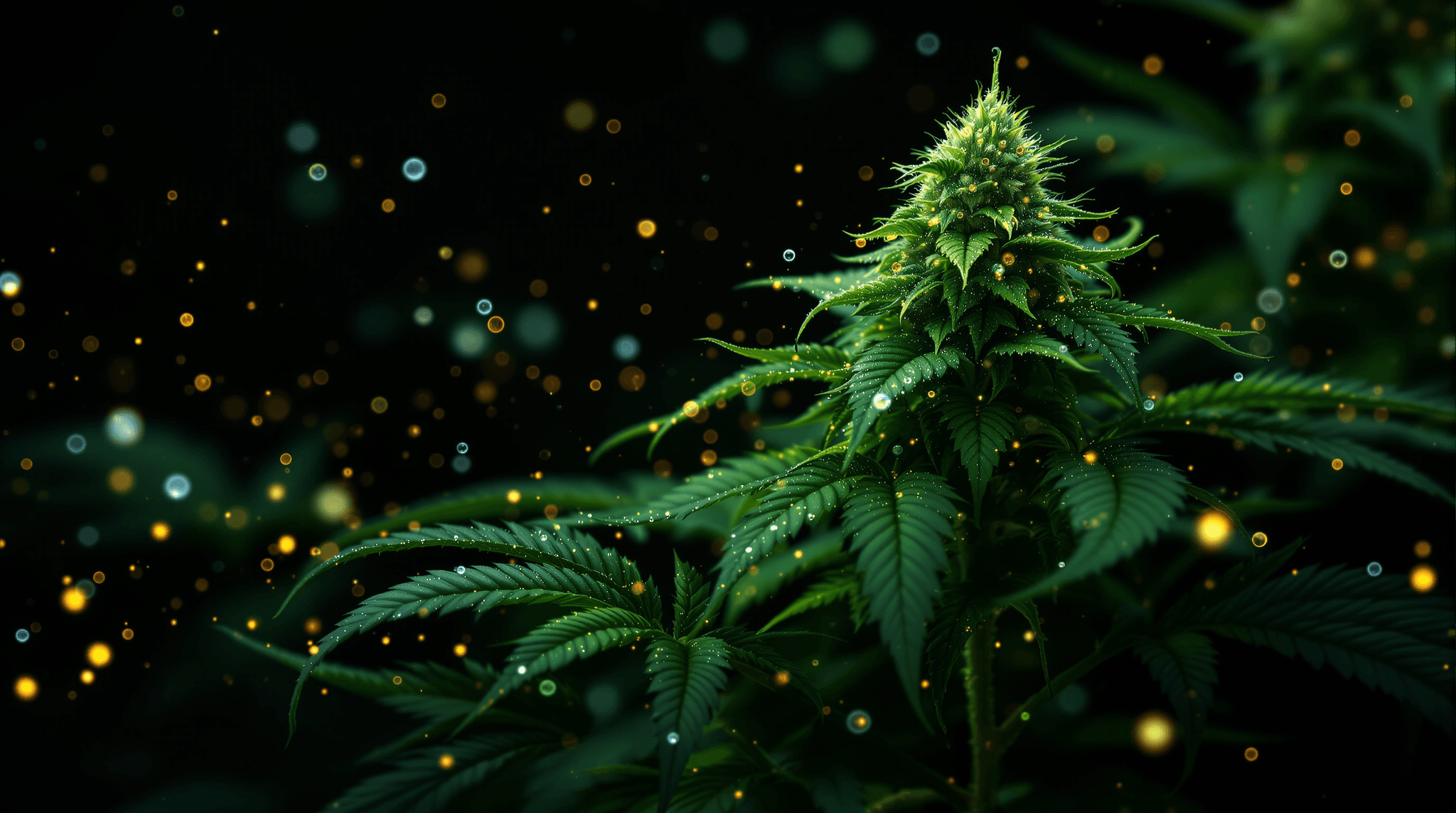
Flip the lights from 18 hours on to 12 hours on, and a cannabis plant reads it like a change of season. That single adjustment tells the plant summer is fading and it's time to stop stacking leaves and start making buds. Growers call it "the flip," and it's one of the most talked-about moments in any indoor grow room.
Cannabis is what botanists call a short-day plant. Its life stages are tied to how many hours of darkness it gets, not just how much light. Understanding the light cycle — the daily rhythm of light and dark you give the plant — is the difference between a lanky, leafy plant that never produces and a dense, resin-coated finish. Let's break down the two big phases every grower works with: the vegetative stage and the flowering stage.
This content is for educational purposes only. Cultivation is legal only where local law allows and often carries plant-count limits, so check your own jurisdiction before you grow anything.
What a Light Cycle Actually Means
A light cycle is the schedule of light hours and dark hours a plant receives in a 24-hour day, written as light-on/light-off. So "18/6" means 18 hours of light and 6 hours of darkness. "12/12" means twelve of each. Indoor growers control this with a simple timer; outdoor growers are at the mercy of the sun and the calendar, which is why outdoor plants naturally flower as summer days shorten into fall.
Cannabis measures the length of its uninterrupted dark period to decide what to do. During long-day conditions — short nights — the plant stays in leafy growth mode. Once nights get long enough, a light-sensitive pigment system flips a hormonal switch and the plant shifts into reproductive mode. Researchers describe this photoperiod response through pigments called phytochromes that let plants track day length and time their flowering. [see citation]
The Vegetative Stage: Building the Frame
The vegetative stage is the growth phase. After a seedling settles in, growers typically run an 18/6 light cycle — 18 hours on, 6 off — though some push all the way to 24 hours of light. Here the plant isn't making buds at all. It's building the skeleton: roots, stems, fan leaves, and the branch structure that will later hold flowers.
During veg, you want to see fast, healthy expansion. Nodes stack up the main stem, side branches shoot out, and the plant roughly doubles or triples in size before you ever think about flipping. This is also when growers do their training — topping, low-stress training (bending and tying branches), and defoliation — to shape a wide, even canopy so light reaches more bud sites later.
How long you veg is up to you and your space. A short veg gives you a smaller plant; a long veg gives you a bigger one with more potential bud sites. That's the whole reason growers control it. The plant will happily stay in the vegetative stage as long as you keep the nights short.
Dr. Greenthumb's genetics — think Insane OG or the collaborations with Barney's Farm — start their lives in exactly this kind of controlled veg before any flowering begins. The structure you build here decides the shape of everything that comes after.
The Flip: Switching to 12/12
When a grower decides the plant is big enough, they change the timer to 12/12 — twelve hours of light, twelve hours of uninterrupted dark. That long dark period is the trigger. The plant reads the extended night as the arrival of fall and begins the flowering stage.
One detail matters enormously here: the dark period has to be truly dark. Light leaks during the night — a closet door crack, an LED indicator, a phone flashlight — can interrupt the dark cycle and confuse the plant. Interrupted nights during flower can cause plants to revert toward veg or throw stress-related growth. Keeping the dark clean is one of the quiet fundamentals of a good flower run.
The Flowering Stage: Making the Buds
Once the flip happens, the flowering stage begins, and the plant's whole priority shifts. For the first week or two you'll often see a burst of vertical growth called "the stretch" — some plants nearly double in height. Then the energy moves from stretching to bud production.
First come the pre-flowers: little pistils, the white hairs that mark female flower sites. Over the following weeks those sites swell into full colas. The plant starts pumping out trichomes — the tiny resin glands that carry cannabinoids and terpenes. This is where all that aroma and flavor you read about on a package actually gets built. Terpenes like myrcene, limonene, and caryophyllene accumulate in those resin glands as the flower matures.
Most photoperiod cannabis runs roughly 8 to 11 weeks in flower depending on the genetics, with indica-leaning plants often finishing faster than sativa-leaning ones. Growers judge ripeness by watching the trichomes with a loupe or scope — clear glands mean the plant isn't done, cloudy and amber glands mean harvest is near. That visual check beats the calendar every time.
Autoflowers: The Exception
Not every plant plays by the photoperiod rules. Autoflowering cannabis, bred with genetics from Cannabis ruderalis, flowers based on age instead of light hours. Ruderalis evolved in far-northern regions with short growing seasons, so it learned to flower on a timer rather than wait for the nights to lengthen. [see citation]
With autos, you can run the same light cycle — often 18/6 or even 20/4 — from start to finish and the plant will flower on its own around a set number of weeks. It's a different approach with less control over size but no need to manage a flip. For anyone learning the ropes, autos remove one big variable.
From Plant to Package: Why This Shows Up on the Shelf
Here's the part that connects the grow room to the jar on the counter. Everything a light cycle builds — the density of the bud, the trichome coverage, the terpene profile — is what a Certificate of Analysis (COA) later measures. When you scan a QR code on a Dr. Greenthumb's package and pull up the batch COA, the cannabinoid percentages and terpene readouts on that lab sheet trace directly back to how the plant was grown and finished.
A well-run flowering stage with clean dark periods and a proper harvest window is why one batch smells loud and sticky and another feels flat. When you're shopping, the label and COA are your window into that process: check the batch ID, the test date, and the terpene list if it's printed. Third-party lab testing is your confirmation that what the grower built in flower is actually what's in the bag.
Quick Recap for New Growers
- Vegetative stage: usually 18/6, short nights, plant builds roots, stems, and leaves. Length is your call.
- The flip: switch to 12/12 to trigger flowering; keep the dark period truly dark.
- Flowering stage: 12/12, long nights, plant stretches then packs on buds and trichomes over roughly 8–11 weeks.
- Autoflowers: flower on age, not light hours — no flip needed.
Whether you ever run a tent yourself or just want to understand what's behind your favorite jar, the light cycle is the backbone of it all. Next time you pull up a COA, remember those numbers started with a timer and a dark room.


