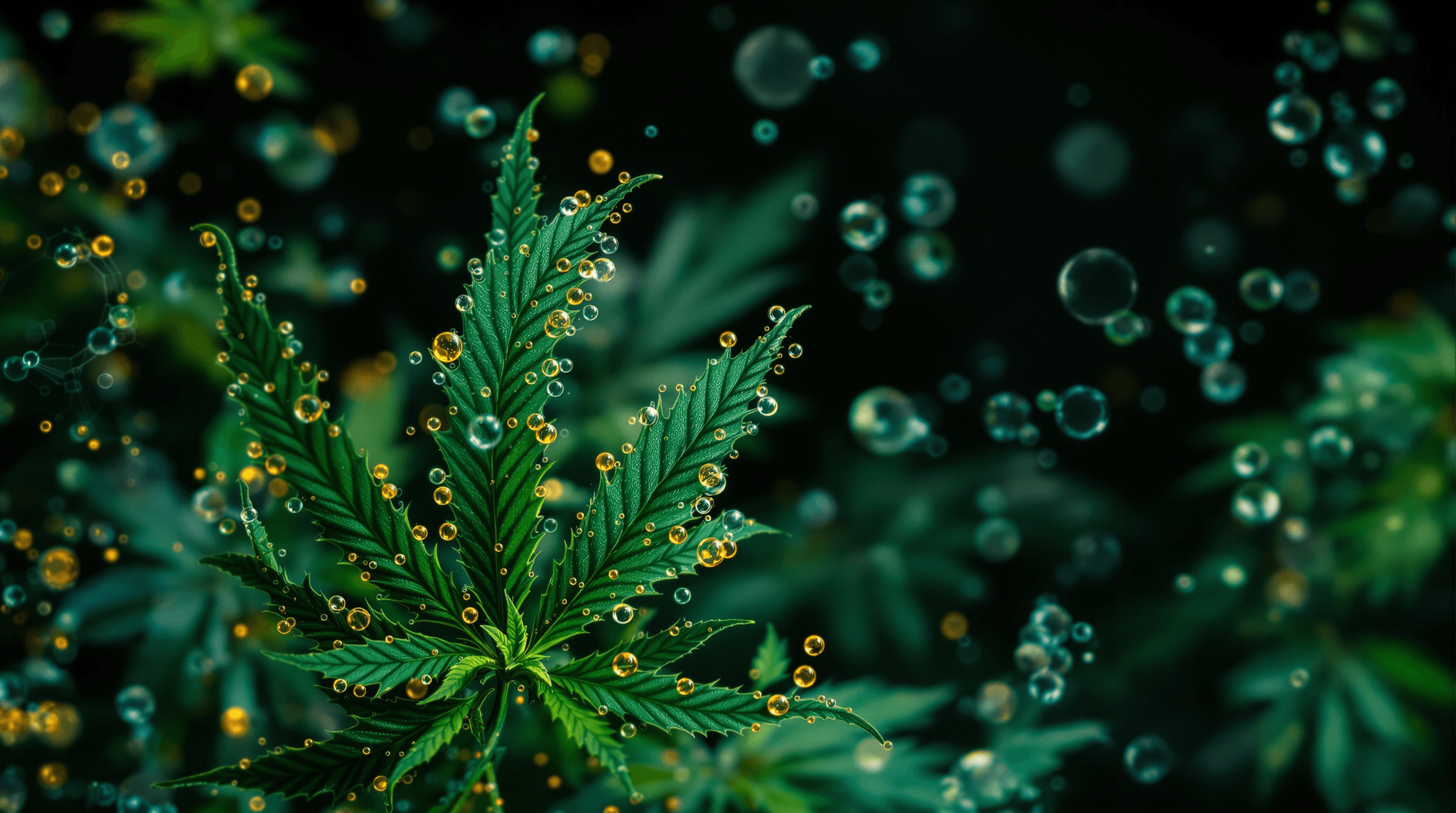
The cannabis beverage revolution started with a simple problem: how do you make oil mix with water? Every THC drink on dispensary shelves today exists because someone figured out how to solve this fundamental chemistry challenge. The answer involves particle physics, specialized equipment, and manufacturing techniques that would make a pharmaceutical engineer take notice.
The Science Behind Making Oil Mix with Water
Cannabinoids are lipophilic — they love fat and hate water. Drop THC extract into a glass of water and it floats on top like cooking oil. This basic incompatibility stumped early cannabis beverage makers who tried everything from vigorous shaking to industrial blenders. Nothing worked. The THC would separate, creating inconsistent dosing and an unpleasant oily texture.
The breakthrough came from nanoemulsion technology. By breaking THC molecules into particles smaller than 100 nanometers — about 1,000 times smaller than the width of a human hair — manufacturers can create stable suspensions that stay evenly distributed in liquid. These microscopic droplets are encapsulated in surfactants that act like molecular bridges between the oil-loving cannabinoids and the water-based beverage.
Particle size matters more than most people realize. Traditional cannabis edibles use particles around 1,000-5,000 nanometers. Premium beverage manufacturers aim for 20-50 nanometers. The smaller the particle, the more surface area exposed to your digestive system. This translates directly to faster onset times and more predictable effects. Some advanced formulations now achieve particle sizes below 20 nanometers, approaching pharmaceutical-grade specifications.
The equipment required for true nanoemulsion isn't cheap. High-pressure homogenizers that can generate 20,000 PSI of force. Ultrasonic processors that use sound waves to shatter molecules. Microfluidizers that force liquids through diamond interaction chambers. We're talking about machines that cost more than luxury cars, which explains why quality cannabis beverages command premium prices.
From Extract to Emulsion: The Manufacturing Process
Creating a THC beverage starts long before anything touches water. First comes extraction — pulling cannabinoids from plant material using CO2, ethanol, or hydrocarbon methods. Each extraction method produces different cannabinoid and terpene profiles, affecting the final beverage's characteristics.
The extracted oil undergoes winterization to remove fats and waxes that could cloud the final product. Then comes decarboxylation, heating the extract to convert THCA into psychoactive THC. Temperature control is critical here — too hot and you destroy terpenes, too cool and the conversion is incomplete.
Next, the decarboxylated extract gets mixed with carrier oils and emulsifiers. Common carriers include MCT oil from coconuts or proprietary blends designed for optimal bioavailability. Emulsifiers like lecithin, polysorbate, or newer synthetic options help the oil and water phases bind together. The exact ratios and ingredients are closely guarded secrets that distinguish one brand's formulation from another.
The mixture then passes through the nanoemulsion equipment. In a high-pressure homogenizer, the liquid gets forced through a tiny valve at extreme pressure, creating massive shear forces that break apart the oil droplets. The process might repeat multiple times to achieve uniform particle size. Quality control technicians use dynamic light scattering equipment to measure particle distribution — consistency is everything.
Water-soluble powder formulations add another layer of complexity. After creating the nanoemulsion, manufacturers use spray drying or freeze drying to remove the water, leaving behind a powder that can be reconstituted. This powder must maintain its nanoscale structure through the drying process, requiring precise temperature and pressure control.
The final formulation stage involves flavor masking. Cannabis extracts have a distinctive taste that not everyone appreciates. Beverage makers use natural flavors, citric acid, and sweeteners to create appealing flavor profiles. The challenge is balancing taste with stability — some flavoring agents can destabilize the emulsion over time.
Why Your Body Processes Cannabis Drinks Differently
Liquid cannabis hits different. That's not just marketing speak — it's biochemistry. When you drink a THC beverage, the nanoemulsified cannabinoids begin absorbing through your mouth and esophagus before they even reach your stomach. This sublingual and esophageal absorption bypasses first-pass liver metabolism, meaning more THC reaches your bloodstream unchanged.
Traditional edibles take a completely different path. The cannabinoids must survive stomach acid, get absorbed in the small intestine, then pass through the liver where THC converts to 11-hydroxy-THC. This metabolite is more psychoactive than regular THC, which explains why edibles can feel more intense than smoking the same amount. The whole process takes 45-120 minutes.
Cannabis beverages split the difference. The nanoemulsified particles that get absorbed early create effects within 15-30 minutes. The remaining cannabinoids follow the traditional edible pathway, creating a second wave of effects. This dual-phase absorption creates a unique experience — faster onset than edibles but longer duration than smoking.
Bioavailability numbers tell the story. Smoking delivers about 30% of cannabinoids to your bloodstream. Traditional edibles hover around 4-12%. Well-formulated cannabis beverages can achieve 20-30% bioavailability, rivaling inhalation methods. The key is particle size and formulation quality. Cheap beverages with poor emulsification might only deliver 5-10% bioavailability.
Understanding these differences is crucial for proper dosing. A 10mg THC beverage might feel stronger than a 10mg gummy due to higher bioavailability and faster onset. First-time beverage consumers often make the mistake of drinking too much too fast, not realizing the effects come on quicker than traditional edibles. Our budtenders say the most common first-timer question is "what should I start with?" Not the strain — the whole category. Flower, edibles, vapes — they don't know the difference yet. We've started keeping a printed cheat sheet at the counter that walks through each option. It drops the average first-visit time from 25 minutes to 12.
The Regulatory Maze: Hemp vs. Cannabis Beverages
The legal scene for THC beverages resembles a patchwork quilt sewn by committee. Hemp-derived beverages containing less than 0.3% THC by dry weight can technically ship across state lines under the 2018 Farm Bill. But here's where it gets complicated — that dry weight calculation creates a loophole. A 12-ounce beverage might legally contain up to 90mg of hemp-derived THC while staying under the 0.3% threshold.
State-legal cannabis beverages face entirely different rules. California caps THC content at 100mg per package with 10mg maximum per serving. Colorado allows 100mg packages but requires clear demarcation of 10mg servings. Massachusetts limits beverages to 5mg per serving. Each state has unique labeling requirements, child-resistant packaging standards, and testing protocols.
The FDA maintains that CBD and THC cannot be added to foods or beverages under current regulations, creating tension between federal policy and state programs. This regulatory uncertainty affects everything from banking relationships to interstate commerce. Many beverage manufacturers operate in legal gray areas, especially those producing hemp-derived products with elevated THC levels.
Testing requirements vary dramatically. California mandates testing for pesticides, heavy metals, microbials, mycotoxins, and foreign materials. Some states only require potency testing. This creates quality disparities across markets — a beverage that passes in one state might fail in another.
What Separates Premium Cannabis Beverages from the Rest
Walk into any dispensary and you'll find cannabis drinks ranging from $5 to $50. The price difference isn't just marketing. Premium beverages use pharmaceutical-grade nanoemulsion technology that creates consistent, predictable experiences. Cheap alternatives often rely on basic mixing techniques that leave cannabinoids unevenly distributed.
Clarity serves as a visual quality indicator. Hold a premium cannabis beverage up to the light — it should be crystal clear or have consistent opacity without separation. Lower-quality products often show visible oil droplets, sediment, or layer separation. This isn't just aesthetic. Separation means inconsistent dosing where one sip might contain minimal THC while another delivers a concentrated dose.
Onset time reliability separates the pros from the amateurs. Premium formulations consistently deliver effects within 15-20 minutes. Budget beverages might take 30-60 minutes with unpredictable timing. This consistency comes from uniform particle size distribution and stable emulsions that don't degrade over time.
Flavor complexity reveals formulation sophistication. Masking cannabis taste while maintaining emulsion stability requires expertise. Premium beverages achieve clean, beverage-appropriate flavors without the telltale hemp aftertaste. They use natural terpenes to enhance effects rather than just synthetic flavoring to hide poor extraction. The afternoon crowd at our Canoga Park store skews toward working professionals in their 30s and 40s. Valley people who know what they want. They're not looking for the highest THC — they're asking about terpene profiles and flavor notes. The education content we publish directly drives these conversations.
Shelf stability tells the real story. Premium beverages maintain potency and consistency for months without refrigeration. The emulsion stays stable, flavors don't degrade, and the cannabinoid content remains accurate. Cheaper alternatives might separate, lose potency, or develop off-flavors within weeks. This stability comes from superior formulation and manufacturing processes that cost more but deliver consistent quality.
The Future is Fast-Acting: Next-Generation Formulations
The next wave of cannabis beverage innovation focuses on onset time. While current nanoemulsions achieve 15-30 minute onset, new technologies promise near-instantaneous effects. Liposomal encapsulation, borrowed from pharmaceutical delivery systems, creates protective bubbles around THC molecules that pass directly through cell membranes.
Water-soluble cannabinoid complexes using cyclodextrins — ring-shaped sugar molecules — show promise for five-minute onset times. These molecular cages trap THC in their hydrophobic centers while presenting water-friendly exteriors. The technology already works in pharmaceutical applications and is being adapted for cannabis.
Solid-state fermentation represents another frontier. Instead of extracting cannabinoids from plants, bioengineered yeast produces water-soluble cannabinoids directly. No emulsification needed. Companies like Cronos Group and Ginkgo Bioworks are investing millions in this technology that could revolutionize production costs and consistency.
Personalized formulations based on genetic testing may customize cannabinoid ratios for individual metabolism. Imagine scanning a QR code that adjusts your beverage's formulation based on your genetic markers for cannabinoid processing. The technology exists — regulatory approval remains the barrier.
The cannabis beverage market is evolving from novelty to sophistication. As manufacturing technology improves and costs decrease, these products will likely capture significant market share from traditional consumption methods. Understanding the science behind the bottle helps consumers make informed choices in this rapidly expanding cannabis product category.
This content is for educational purposes only.

