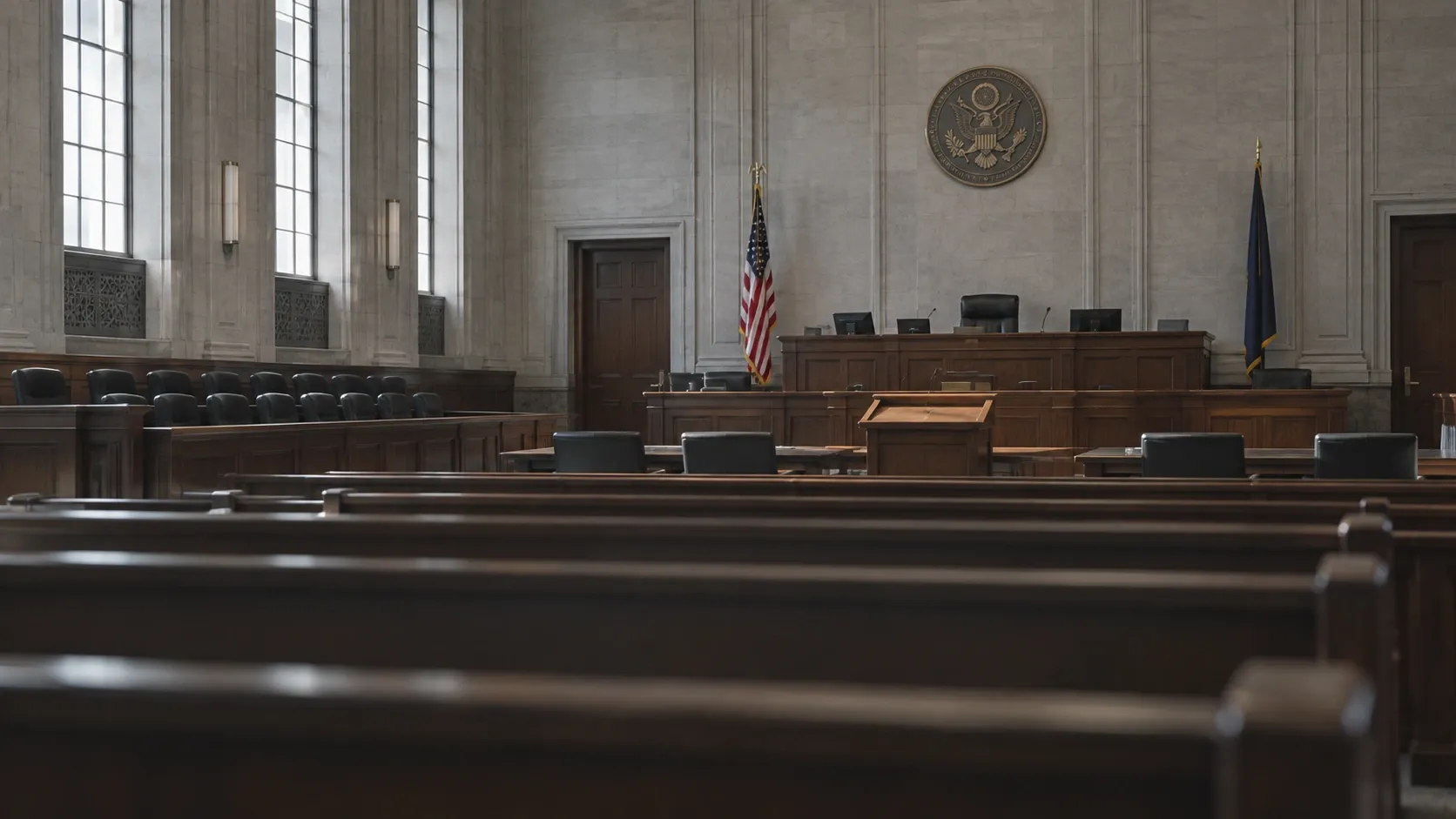
In July 2004, a courtroom in Coeur d'Alene, Idaho went quiet and then loud. U.S. District Judge Edward Lodge had just sentenced Nate Norman — 21 years old, a high school dropout who had been delivering pizzas a few years earlier — to twelve years in federal prison. Four rows of his family were sitting behind him. Contemporaneous reporting from the Spokesman-Review described heads snapping back, gasps, and hands going to mouths.
He was one of eight co-defendants sentenced over those two days. Police believed the operation had moved roughly 17,000 pounds of marijuana and generated around $38 million in cash.
Today you can walk into a licensed store in most of the country and buy that same plant from a display case, with a receipt and sales tax.
That gap is worth looking at directly, because the easy version of the story — "look how much has changed" — turns out to be only about half right.
What actually happened

Norman's operation was almost absurdly low-tech. He and his friend Topher Clark had noticed that British Columbia cannabis was better and cheaper than what was available in northern Idaho. So they hiked north through the woods in camouflage, carried product back on foot, and sold it at roughly double what they paid.
There was no cartel involved, no organized crime, and no outside financing. By one producer's account they started with roughly $1,600 and a single kilogram, doubled the money, bought two, then four. Within about two years there were speedboats, sports cars, and houses on the lake.
The collapse was not a raid. It was a rival. Brendan Butler, another young Idaho dealer, hired a man named Giovanni Mendiola to kill Norman. Mendiola killed Butler instead. As local reporting later documented, the homicide investigation drew in the Idaho State Police and the FBI, and the trafficking case unspooled from there. Facing federal conspiracy charges, the crew identified Norman as the leader.
He served most of the sentence and was released early. He has not spoken publicly about the case in over a decade, and this article is not an attempt to find him.
What has changed
Quite a lot, at the state level. According to the Congressional Research Service, 40 states plus the District of Columbia and several territories had medical cannabis programs as of March 2026. Licensed retail is now an ordinary regulated industry, with seed-to-sale tracking, mandatory lab testing, and age verification at the door.
There has been federal movement too. A December 2025 executive order directed the Attorney General to expedite moving cannabis from Schedule I to Schedule III of the Controlled Substances Act. In 2026, the Department of Justice and DEA announced that FDA-approved marijuana products with medical uses, and products regulated under a state medical marijuana license, are now treated as Schedule III.
That is a real change. Schedule III substances are recognized as having accepted medical use, which opens research pathways that were nearly impossible under Schedule I.
What hasn't changed — and this is the part people miss
Rescheduling did not touch what Norman did. The reclassification applies to FDA-approved and state-licensed medical products. Unlicensed bulk marijuana remains a Schedule I controlled substance, carrying the same severe federal criminal penalties it always has.
Moving thousands of pounds across an international border without a license is not a regulated activity that has since been legalized. It is a federal felony today, prosecuted under the same statute, with the same conspiracy exposure. If Norman started over this year with the same plan, the outcome would look much the same.
And Idaho never legalized anything. The state where all of this happened remains one of a small handful of U.S. jurisdictions with full prohibition — no medical program, no decriminalization tier, no adult-use framework. Under the Idaho Controlled Substances Act, marijuana is a Schedule I substance at the state level. Possession of any amount is a misdemeanor on a first offense; more than three ounces is a felony; cultivation is a felony regardless of quantity. Our Idaho legal library page carries the current penalty tiers and statute citations.
Idaho also does not follow the federal 0.3% THC standard for hemp. Consumer hemp products must contain 0.0% THC to be legal there — meaning CBD products sold openly in most states are contraband across that border. Advocacy groups tracking the state note it was the last state to legalize hemp production at all.
The border matters here in a way it did not in 2004. Idaho now sits against Oregon, Washington, and Nevada — all fully legal for adult use. The same geography that made Norman's route profitable makes interdiction an active enforcement priority today, just in the opposite direction.
Then and now, side by side
- Unlicensed bulk trafficking, federally. Schedule I felony in 2004. Still a Schedule I felony today.
- Licensed medical products, federally. Schedule I in 2004. Schedule III now.
- Cannabis in Idaho. Fully illegal in 2004. Fully illegal today.
- Licensed retail in most states. Did not exist in 2004. An ordinary regulated industry now.
Three of those four lines did not move.
So what actually separates then from now?
Not the plant. Not really even the quantity.

The difference is the license, and the regulatory structure attached to it. A licensed operator is subject to state tracking, testing, packaging rules, security requirements, tax remittance, and audit. That framework is the entire thing separating a legal cannabis business in 2026 from what happened in the woods outside Coeur d'Alene.
This is the practical takeaway for anyone buying today, and it is not an abstraction:
- Product bought outside a licensed channel carries the old legal exposure. The existence of legal cannabis nearby does not decriminalize the unlicensed version of it.
- State lines still matter enormously. Buying legally in one state and driving into a prohibition state with it can be charged as trafficking. Legality is local and it does not travel with you.
- A medical card from one state is not automatically recognized in another. Local law applies where you are standing, regardless of what your home state permits.
Our state-by-state legal library covers current possession limits and penalties where you live, and the distinctions that matter most are not always the obvious ones — the difference between hemp and marijuana, for instance, is a single number in a statute, and it determines everything downstream.
The part worth sitting with
Norman was a teenager when he started and 21 when he was sentenced. The plant he was moving is now sold openly, by licensed businesses, to adults, in most of the country. He served over a decade for it.
That is not an argument that he was innocent — he pleaded guilty, and the operation was substantial. It is a reminder that the line between a criminal enterprise and a regulated industry was drawn by legislatures, not by the product, and that the line has moved in some places and hardened in others.
If you are in a state with legal access, the framework you are buying inside of is the whole difference. It is worth understanding what it covers and where it stops.


