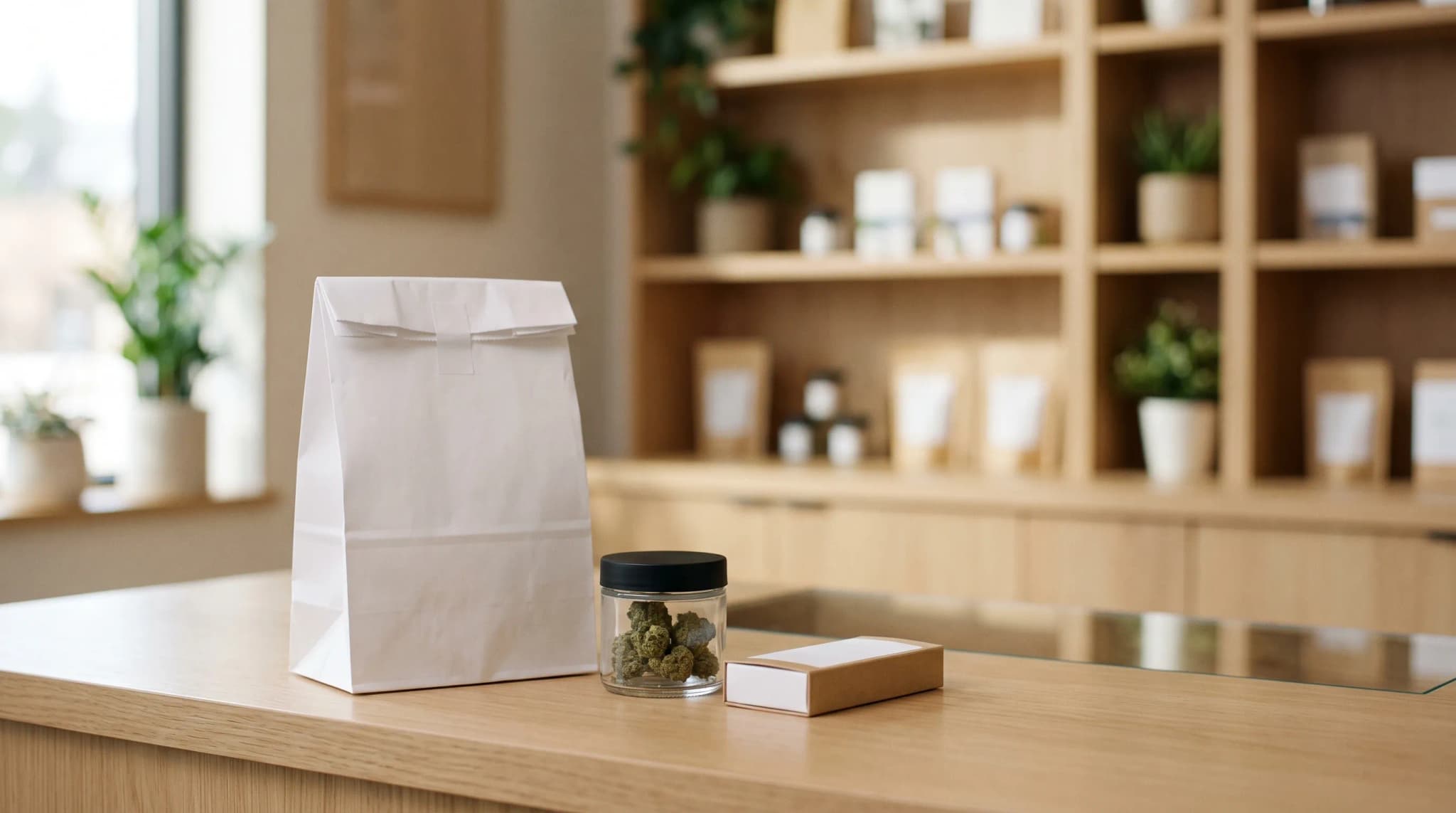
An adult 21 or older can buy up to 28.5 grams of flower, 8 grams of concentrate and 6 immature plants from a California dispensary in a single day. Medical patients with a physician's recommendation can buy up to 8 ounces of flower and 12 immature plants a day, or more if that recommendation specifies a larger amount. The state adds a 15 percent cannabis excise tax at the register, and sales tax is charged on top of that.
Those are the headline numbers. The details decide what actually fits in one purchase: which products count as concentrate, how an edible measured in milligrams fits a limit measured in grams, and why the store's daily limit and your own possession limit are two different rules. Every figure below comes from California's cannabis regulator, its statutes or its tax agency, and the sources are linked at the end.
California's daily purchase limits
California's Department of Cannabis Control sets the daily limits in its regulations, at section 15409 of title 4 of the California Code of Regulations. The rule is written as a limit on what a licensed retailer may sell to one customer in one day.
For an adult-use customer, the limits are:
- 28.5 grams of non-concentrated cannabis, which in practice means flower.
- 8 grams of cannabis concentrate, including concentrate contained in cannabis products.
- 6 immature cannabis plants.
For a medicinal patient, or a primary caregiver buying on a patient's behalf, the limits are:
- 8 ounces of medicinal cannabis in the form of dried flower, or the equivalent under the state's plant-conversion rule.
- 12 immature cannabis plants.
If a physician's recommendation specifies a different amount for a patient, the regulation lets the patient buy an amount consistent with it.
Flower and concentrate are separate limits, not one shared total. A customer can buy an ounce of flower and a vape cartridge in the same visit, as long as each stays inside its own limit.
What counts toward the 8-gram concentrate limit
The 8-gram limit covers more than wax and shatter. The state's regulations define cannabis concentrate broadly. The definition names, among others, kief, tinctures, capsules, extracts, cannabis butter, vape cartridges, dabbable products such as shatter and wax, and tablets.

So a vape cartridge counts toward the 8 grams, not the 28.5. So does a tincture. If you are buying several cartridges and a jar of live resin, it is the concentrate limit you will reach first. For what separates one cartridge or extract from another, see our guides on how to choose a vape cartridge and how to choose a concentrate.
Grams of concentrate versus milligrams of THC
Edibles add a second kind of limit. California caps what goes into the package, measured in THC rather than weight:
- Edibles: no more than 10 milligrams of THC per serving and 100 milligrams per package.
- Topicals and concentrates: no more than 1,000 milligrams of THC per package for adult use.
- Medical-only products: topicals and concentrates labeled "For Medical Use Only" may contain up to 2,000 milligrams per package, and can only be sold to medicinal patients.
These are product rules, not purchase limits. They control how strong a single package can be. How many packages you can buy is still governed by the daily limits above, and the regulation counts concentrate "contained in cannabis products" toward the 8 grams. The regulation makes the retailer responsible for determining how much concentrate a product contains, and it does not set a conversion, so if you are buying a large mixed order, ask the budtender where it lands before you reach the counter.
The store limit and the possession limit are different rules
The daily limit governs the store. A second limit governs you.
Under California's Health and Safety Code, section 11362.1, it is lawful for an adult 21 or older to possess, transport, purchase or give away up to 28.5 grams of cannabis that is not concentrated, and up to 8 grams of concentrated cannabis, including concentrate contained in cannabis products. The same section lets an adult grow up to six living plants at home.
The numbers match the store limits, but the rules work differently. The regulation limits what one retailer may sell you in a day. The statute limits what you may carry and buy, wherever it came from. Buying an ounce at one store and another ounce at a second store does not make the second ounce legal to carry. It takes you past the amount the statute protects.
The same section lets you give up to 28.5 grams of flower and 8 grams of concentrate to another adult 21 or older, as long as nothing is paid in return. Selling it, even at cost, is not covered.
Medical patients: higher limits, lower tax
Medical patients can buy at 18 rather than 21. State law lets a retailer sell to someone 18 or older who has a valid government-issued ID and either a valid physician's recommendation or a valid county-issued medical marijuana identification card.
The Department of Cannabis Control's consumer guidance sums up what that buys: medicinal users have higher possession limits, can grow more plants at home if their physician recommends it, and can buy more each day if their physician recommends it.
Patients can also pay less tax, but only with the card. The California Department of Tax and Fee Administration exempts medicinal cannabis from sales tax when the buyer shows a Medical Marijuana Identification Card issued by the California Department of Public Health, along with a valid government-issued ID. A physician's recommendation on its own does not qualify for the exemption, and the 15 percent cannabis excise tax applies either way.
What you will pay at the register
Two state taxes apply to every adult-use purchase.
The cannabis excise tax is 15 percent of the retailer's gross receipts. It briefly rose to 19 percent on July 1, 2025, and returned to 15 percent on October 1, 2025. The retailer collects it from you and must list it separately on the receipt.
Sales tax is charged on top of the excise tax, not alongside it. California's statewide base sales tax rate is 7.25 percent, and many cities and counties add district taxes that raise it.
Here is how the two state taxes stack on a $40 purchase at the 7.25 percent base rate, before any district tax:
- Price: $40.00
- Cannabis excise tax at 15 percent: $6.00, bringing the subtotal to $46.00
- Sales tax at 7.25 percent of $46.00: $3.34
- Total: $49.34
In a city with district taxes the sales tax line is higher. For how the shelf price itself is set, before any tax, see how dispensary flower is priced.
ID, hours and getting it home
Bring a valid photo ID. The Department of Cannabis Control lists a government-issued photo ID such as a driver's license, a military photo ID and a passport as acceptable, and a licensed store cannot complete a sale until you show one.
State rules allow sales between 6 a.m. and 10 p.m., and a city or county can set shorter hours. The whole transaction has to be finished by 10 p.m.

Once you have it, keep it sealed. Having an open container of cannabis while driving or riding in a vehicle is illegal in California, so cannabis in a car must be in a sealed package or container, or in the trunk. You cannot use cannabis in public places, and you cannot use or possess it on federal land, such as national parks. Taking cannabis across a state line is illegal under federal law, even into another state where it is legal.
How to use this when you shop
- Think in two buckets. Flower counts toward 28.5 grams. Cartridges, extracts, tinctures and kief count toward 8 grams.
- Ask how edibles are counted. Each package is capped at 100 milligrams of THC, but the conversion into the concentrate limit happens at the register, so ask before a big mixed order.
- Don't split a large purchase across stores. The possession limit applies to what you are carrying, wherever you bought it.
- Budget for tax. Add 15 percent excise, then sales tax on the new total.
- Bring a photo ID and a sealed bag for the car. A passport works if you are visiting from another state or country.
- Buy from a licensed store. Licensed retailers can only sell products that passed state testing. Here is how to tell if a California dispensary is licensed.
For the full state legal picture, including possession, home growing and public use, see California's cannabis laws. If you are shopping in Illinois instead, the rules there are different: see how much weed you can buy in Chicago. To shop in person, find a Dr. Greenthumb's location.
Sources and further reading
- Medicinal and Adult Use Cannabis Regulations, July 2026 (PDF) — California Department of Cannabis Control. Section 15409 sets the daily limits, section 15000 defines cannabis concentrate, and section 17304 sets THC limits per package
- What's legal — California Department of Cannabis Control, on medicinal limits, vehicles, public use and state lines
- Retail — California Department of Cannabis Control, on accepted ID and hours of sale
- Health and Safety Code section 11362.1 — California Legislature, on adult possession, purchase and gifting limits
- Business and Professions Code section 26140 — California Legislature, on age and ID requirements for adult-use and medicinal sales
- Tax Guide for Cannabis Retailers — California Department of Tax and Fee Administration, on the 15 percent excise tax, its 2025 changes and the medicinal sales tax exemption
This article is general information for adults 21 and older, and for medical patients 18 and older, and is not legal advice. Cannabis rules and tax rates change; confirm current requirements with the Department of Cannabis Control and your city or county. Information is current as of October 1, 2026.


