Much of the skunky smell of cannabis comes from a family of sulfur compounds. The U.S. Environmental Protection Agency ranks three ways to deal with indoor air pollution, in order of effectiveness: control the source, ventilate with outdoor air, then clean the air. This guide follows the same order. Here is what the research says about each step, and what to skip.
Why does weed smell so strong?
Cannabis produces more than 200 known aroma compounds, and earlier studies of its scent focused mainly on terpenoids, the class that includes terpenes. A 2021 study in ACS Omega analyzed flowers from 13 cultivars and traced the skunk note to a newly identified family of volatile sulfur compounds. The researchers named one, 3-methyl-2-butene-1-thiol, as the primary odorant. According to the American Chemical Society, the same compound has been linked to the flavor of "skunked" beer. Our guide to what terpenes are covers the rest of the aroma.
Two more findings from that study bear on smell control. The researchers also detected the compound in cannabis concentrates, such as those used for vaping. And in a greenhouse experiment that followed four plants, the sulfur compounds rose toward the end of flowering and peaked during curing. A final measurement, taken 10 days after curing ended, showed a substantial drop in all but one of them.
How do you stop weed smell at the source?
EPA's first step against indoor air pollution is to eliminate or control the source. For weed smell, that means the cannabis itself, the gear you smoke from, and the smoke.
1. Store it sealed. Keep flower in an airtight container. Our guide to whether weed goes bad covers how to store it and why the smell is the first thing to fade.
2. Clean what you smoke from. Bong water that sits collects ash and plant debris, and it smells. Our guides to cleaning a bong and cleaning a glass pipe walk through both.
3. Don't burn it indoors. The next section shows how long smoke particles can stay in a closed room. In California and Chicago, the short answer to where you can smoke is private property; our guides to where you can smoke weed in California and where you can smoke weed in Chicago cover the rules, including what landlords can ban.
How long does weed smoke linger in a room?
A 2021 study in Atmospheric Environment: X measured fine particles from cannabis in 60 controlled experiments in a 43-cubic-meter room of a house, with the window and door closed. Joints produced the highest particle levels of the cannabis methods tested. A bong, a glass pipe and a vape pen had emission rates of 67%, 54% and 44% of a joint's.
For one example joint, the researchers projected that particle levels in the closed room would take about 24 hours to fall close to zero. Particles from the vape pen cleared fastest, which the authors said was likely due to the vaping aerosol evaporating. The study measured particles, not smell, and it did not compare fans, open windows or air purifiers. It also tested a vape pen with a cartridge, not a dry herb vaporizer.
Ventilation is EPA's second step: diluting and exhausting pollutants with outdoor air. EPA's air cleaner guide adds that filtration does not replace the need to control pollutants and ventilate.
Does an air purifier get rid of weed smell?

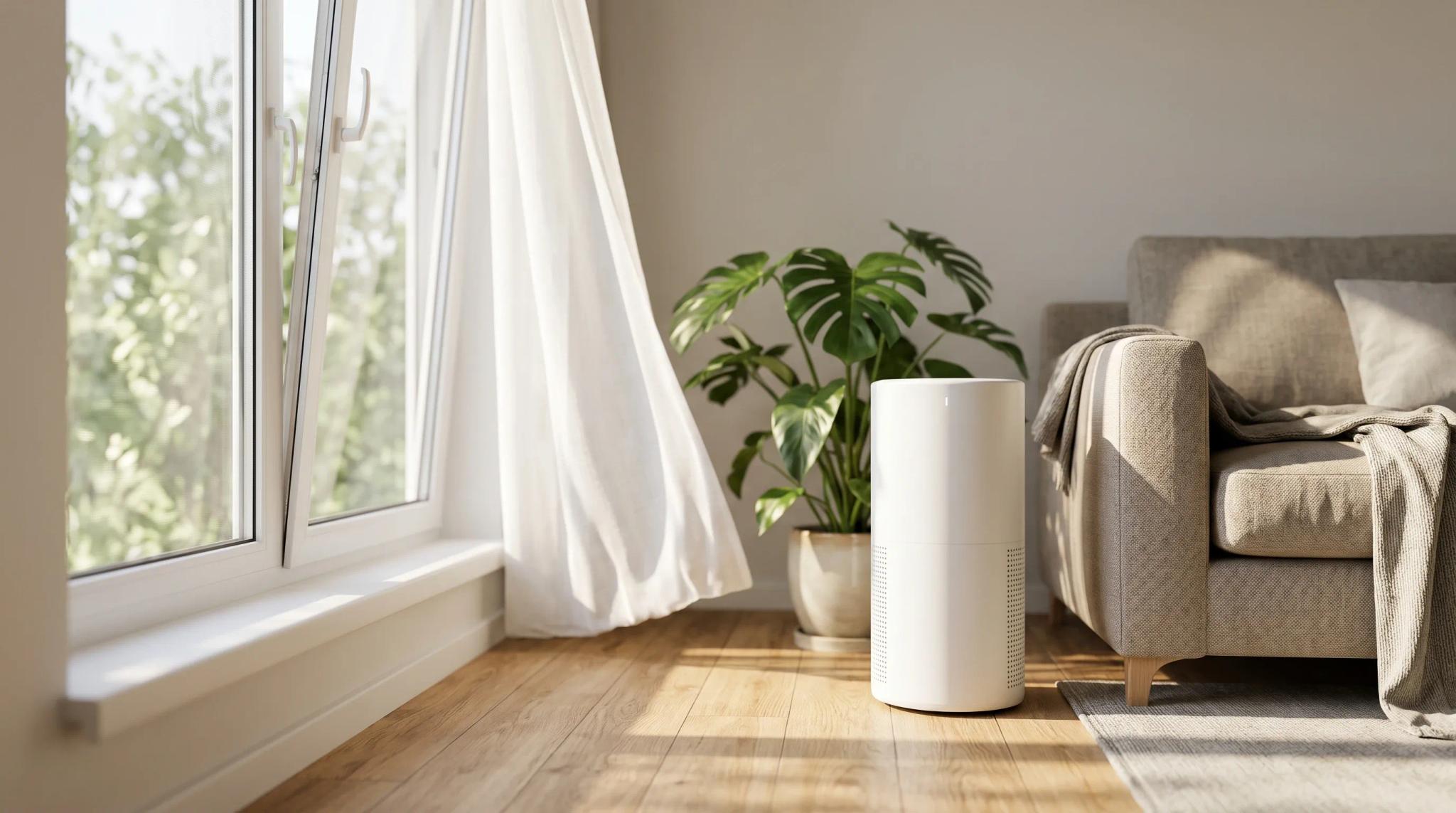
It depends on the filter. EPA's Guide to Air Cleaners in the Home says most filters are designed to filter either particles or gases. Portable air cleaners often reach a high clean air delivery rate (CADR) with a HEPA filter, but the CADR rating system is for particles only.
To filter gases, EPA says to choose an air cleaner with an activated carbon filter or another filter designed to remove gases. It says activated carbon filters can be effective when there is a large amount of material in the filter, and that there are no widely used performance rating systems for filters that remove gases.
California's Air Resources Board goes further. It says many commonly used residential air cleaners will not effectively remove odors, and that thin activated charcoal filters may remove odors only for a short period. It says larger quantities of activated charcoal are more effective and last longer, and that an air cleaner should be CARB certified.
Do ozone generators remove weed smell?
Skip them. Some machines sold as air cleaners make ozone on purpose. EPA found that at concentrations within public health standards, ozone is not effective at removing many odor-causing chemicals. EPA cites experiments suggesting that body odor may be masked by the smell of ozone but is not removed. EPA also says no agency of the federal government has approved these devices for use in occupied spaces, and its air cleaner guide calls ozone a lung irritant.
What about clothes, cars and rentals?
We did not find a published study that tests ways to remove cannabis smoke smell from clothing or upholstery, so we can't point to a method with evidence behind it.

A car is a legal question as well as a smell one. In California, state law bars possessing an open container or open package of cannabis while driving or riding in a vehicle. In Illinois, the Vehicle Code requires cannabis carried by drivers and passengers to be in a sealed, odor-proof, child-resistant container, with further conditions on where it is kept; our Chicago guide covers the details.
Rentals have their own rules. Landlords can ban smoking in their units, and hotels and short-term rentals set their own policies on cannabis, as our guide to where you can smoke weed in San Diego explains. California's Department of Cannabis Control advises reading your rental agreement.
Sources and further reading
- ACS Omega, Identification of a New Family of Prenylated Volatile Sulfur Compounds in Cannabis Revealed by Comprehensive Two-Dimensional Gas Chromatography, Oswald et al., 2021
- American Chemical Society, Why cannabis smells skunky, December 2021
- Atmospheric Environment: X, Measuring indoor fine particle concentrations, emission rates, and decay rates from cannabis use in a residence, Ott et al., 2021
- U.S. Environmental Protection Agency, Guide to Air Cleaners in the Home, 2nd edition
- U.S. Environmental Protection Agency, Ozone Generators that are Sold as Air Cleaners: An Assessment of Effectiveness and Health Consequences
- California Air Resources Board, Indoor Air Cleaners for Removal of Odors and Gases
- Health and Safety Code § 11362.3, California
- 625 ILCS 5/11-502.15, Possession of adult use cannabis in a motor vehicle, Illinois Vehicle Code
This article is general information for adults 21 and older and is not medical advice. Current as of November 2026.


