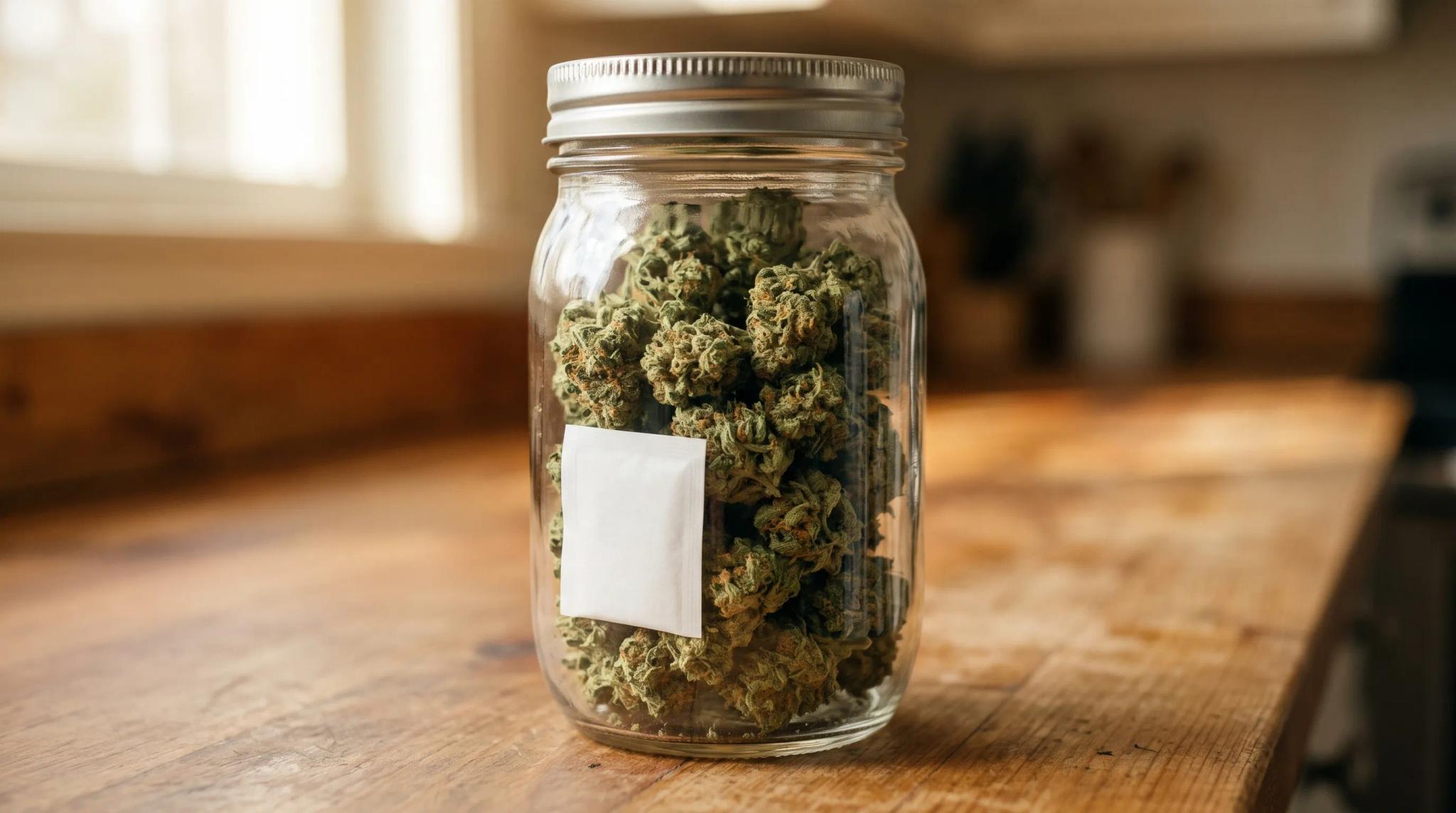
Flower that crumbles when you touch it has lost moisture, and it can be brought back toward a normal level. The method is simple: a sealed container, a two-way humidity pack and a day or two of patience. Two things are worth knowing before you start. Rehydrating restores moisture, not aroma that has already faded, and adding too much moisture creates a mold risk that is worse than dry flower.
How dry is too dry?

The cannabis industry measures moisture with water activity, a number between 0 and 1 that describes how much free water a material has available. ASTM International's standard for stored flower, D8197, sets the acceptable range at 0.55 to 0.65. Below 0.55, it says, flower is open to physical damage, meaning breakage, in routine handling and storage. Above 0.65, it is open to the growth of microorganisms such as mold.
California uses the same upper line. Under the state's cannabis regulations, a sample of dried flower, including pre-rolls, passes water activity testing only if it does not exceed 0.65, and a batch that fails cannot be released for retail sale. A batch that passed was in range when it was tested. What happens after that depends on how it was stored.
At home you can't measure water activity without a meter, so texture is the practical guide. Our guide to choosing cannabis flower covers how fresh flower should look and feel. Flower that snaps or turns to dust between your fingers is past the point most people want to smoke or roll.
How to rehydrate dry weed, step by step
1. Check it for mold first. Look for anything fuzzy, webbed or powdery that doesn't look like trichomes, and smell for anything musty or damp. If you find either, throw it out. Adding moisture to flower that already has mold gives the mold more of what it needs.
2. Put it in an airtight container. Vivi, which makes humidity packs for cannabis, describes rehydration as three things: a tight seal, moisture and time. A glass jar or a sturdy zip-top bag works.
3. Add a two-way humidity pack. A two-way pack gives off moisture when the air in the container is too dry and takes it up when the air is too damp, so the container settles at the pack's rated humidity. Vivi's guide puts the target for flower at 55% to 65% relative humidity, with the lower end giving a more pliable product and the higher end stickier buds.
4. Seal it and wait. Dry flower takes time to draw moisture back in. Vivi suggests waiting 24 to 48 hours, depending on how dry the flower is and how much is in the container. Resist opening the container every few hours, since each opening lets dry room air back in.
5. Check the texture, then leave the pack in. When the flower bends a little instead of crumbling, it is back in range. Because a two-way pack also takes up moisture when the air gets too damp, you can leave it in the jar to hold the flower there.
Why not orange peel, lettuce or a damp sponge?
These are the classic household tricks, and they do add moisture. The problem is that they have no way to stop. Vivi's guide says not to rehydrate flower with lettuce leaves, soaked sponges, citrus peels or open bowls of water, because those methods can add too much moisture, alter flavor and create conditions that may lead to mold. Vivi sells humidity packs, so it has a commercial interest in that view, but the point lines up with the standards: the 0.65 ceiling in both ASTM's specification and California's testing rule exists because of mold, and a piece of fruit or a wet sponge has nothing to stop it from releasing water past that line.
If you try a household method anyway, check the container often, take the peel or sponge out as soon as the flower softens, and treat any musty smell as a reason to throw the flower out.
What rehydrating cannot fix
Rehydrating changes how much water the flower holds. It does not undo the chemical losses that come with age. In a 2020 storage study from the Technion in Israel, terpenoid concentrations, the compounds behind most of a flower's smell, fell rapidly under every storage condition tested. In the one CBD-rich variety the researchers profiled for terpenes, the average dropped by more than half within four months, while cannabinoids across the two varieties studied fell by about a quarter over a full year. We cover that study in more detail in does weed go bad?
Nothing in that research suggests a humidity pack brings those compounds back. Rehydrated flower should handle and roll better, but if it smelled flat before, it will most likely still smell flat. Our terpenes explainer covers what those compounds are.
How to keep flower from drying out again

The simplest fix is to stop the loss in the first place. Keep flower in an airtight container, and keep it whole until you're ready to use it: in the same Technion study, whole flower stored cool held up best, and grinding was among the least favorable conditions. A two-way humidity pack in the jar keeps the moisture steady between uses, within the same 55% to 65% range.
Texture matters most when you're rolling. Rolling a joint is easier with flower that bends rather than crumbles, and if you buy pre-rolls instead, our pre-roll guide covers what to look for. The label guide explains the dates printed on the package, which tell you how long a product has been sitting.
For jars and other storage accessories, check the menu at La Mesa or Canoga Park.
Sources and further reading
- ASTM International, Standard Specification for Maintaining Acceptable Water Activity (aw) Range (0.55 to 0.65) for Dry Cannabis Flower Intended for Human/Animal Use, D8197-22
- Cal. Code Regs. tit. 4, § 15717, Moisture Content and Water Activity Testing, Department of Cannabis Control, Medicinal and Adult Use Cannabis Regulations, revised January 1, 2026
- Vivi, How to Rehydrate Weed, Explained
- Frontiers in Plant Science, Metabolic Profiling of Cannabis Secondary Metabolites for Evaluation of Optimal Postharvest Storage Conditions, Milay, Berman, Shapira, Guberman and Meiri, 2020
This article is general information for adults 21 and older. It is not medical or legal advice. Current as of November 2026.


