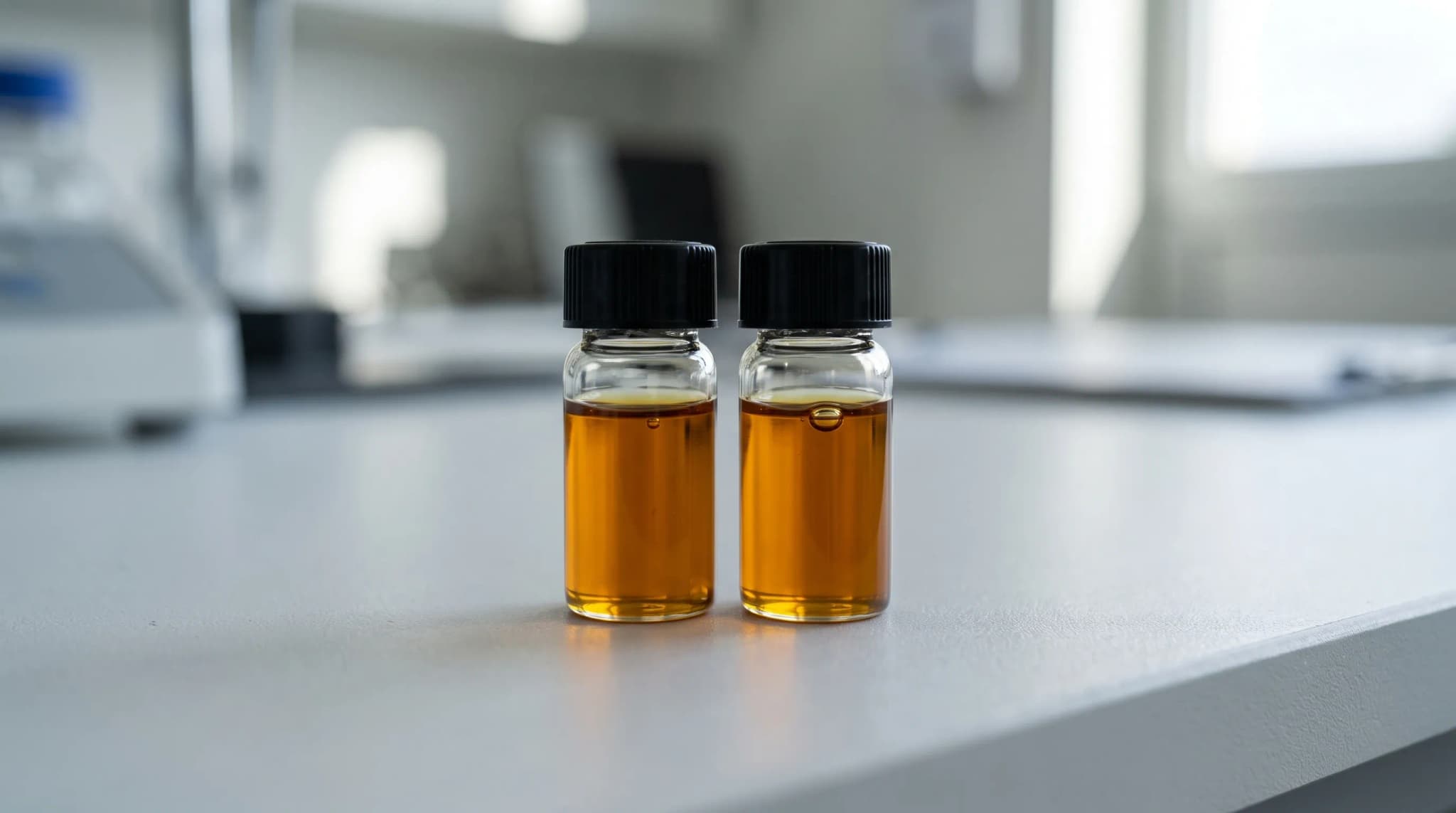
Delta-8 and delta-9 are two forms of THC with almost the same chemical structure. Delta-9 is the main intoxicating compound in cannabis and the THC you buy at a licensed dispensary. Delta-8 occurs naturally in cannabis only in tiny amounts, so most delta-8 products are made by chemically converting CBD from hemp.
That difference matters more than the chemistry. Delta-8 has mostly been sold outside licensed cannabis stores, under the federal hemp definition, often without the testing and labeling rules dispensary products must follow. California has already pulled it from hemp retail, and a federal change on December 11, 2026 will move most delta-8 products outside the federal definition of hemp. This guide covers how the two compare, what federal health agencies and lab testing have found, and where delta-8 stands legally. The sources are linked at the end.
What delta-8 and delta-9 THC are
Both are tetrahydrocannabinols, or THC. They have the same atoms, arranged almost identically. The number refers to where one double bond sits in one of the molecule's rings: one position over, and that small shift is the whole chemical difference.
Delta-9 is the compound people usually mean by THC. The cannabis plant makes it mostly in the form of THCA, which turns into delta-9 when it's heated. See what THCA is and how it becomes THC.
Delta-8 also occurs in the plant, but only in small quantities. For an overview of the other cannabinoids, see cannabinoids 101.
How delta-8 products are made

Because there is so little delta-8 in the plant, products that contain a lot of it are usually made from CBD. The CDC describes the process: CBD from hemp can be converted into delta-8 THC using a solvent, acid and heat, and the process may create harmful by-products that are not well characterized.
The FDA has raised similar concerns. It has warned that some manufacturers may use potentially unsafe household chemicals in the conversion, that the process can leave harmful by-products or contaminants, and that production may happen in uncontrolled or unsanitary settings.
Does delta-8 get you high?
Yes. The FDA describes delta-8 as psychoactive and intoxicating, with effects similar to delta-9. It also notes that delta-8 products likely expose people to far more delta-8 than occurs naturally, so the long history of cannabis use can't be relied on to show that they're safe.
The FDA also says it hasn't evaluated or approved delta-8 products for safe use in any context, and a product's actual strength depends on what's really in it. That's where testing comes in.
What federal agencies and lab testing have found
Poison centers and adverse events. In a 2021 health advisory, the CDC reported that U.S. poison centers recorded 661 delta-8 exposures from October 2020 through July 2021. Of those, 18 percent required hospitalization and 39 percent involved children under 18.
The FDA's later count was larger. Poison centers received 2,362 delta-8 exposure cases from January 1, 2021 to February 28, 2022. 41 percent involved children, 40 percent were unintentional, and 82 percent of the unintentional exposures involved children. The FDA also received 104 adverse event reports over a similar period, two-thirds of them after people ate delta-8 foods such as gummies or brownies. One poison center case involving a child was coded with a medical outcome of death.
Labels and contaminants. A study by University of Rochester researchers, published in Chemical Research in Toxicology, tested 27 delta-8 vape products and found that none accurately labeled its delta-8 content. 11 of the 27 contained high levels of unlabeled cutting agents, and all of them tested positive for heavy metals.

None of this means every delta-8 product is dangerous. It means that outside a regulated market, you often can't confirm what's in one.
Is delta-8 legal?
Federally, for now. Until December 10, 2026, federal law defines hemp by its delta-9 THC content: no more than 0.3 percent on a dry-weight basis. Delta-8 made from hemp has been sold under that definition, which is why it turned up in smoke shops and gas stations in states where cannabis itself is illegal.
From December 11, 2026, mostly not. The federal hemp redefinition replaces the delta-9 measure with total THC and caps finished hemp cannabinoid products at 0.4 milligrams of total THC and similar-effect cannabinoids per container. For scale, a gummy with 10 milligrams of delta-8 would hold 25 times that cap. The new definition also excludes naturally occurring cannabinoids that were synthesized or manufactured outside the plant. See when the federal hemp ban takes effect for the details and the dates.
In California, it's already off hemp shelves. California restricted hemp food, beverage and supplement products with any detectable THC in 2024, and from January 1, 2026, inhalable hemp products containing THC can no longer be sold at retail. A delta-8 product at a California smoke shop or gas station is no longer a legal sale. See how to tell if a California dispensary is licensed.
Other states set their own rules, and many restrict or ban delta-8 regardless of federal law. Check where you live.
For how hemp and marijuana are defined in the first place, see hemp vs marijuana.
Delta-8 vs dispensary THC
The practical difference is the system each comes from:
- Source. Dispensary THC is delta-9 from the cannabis plant. Most delta-8 is converted from hemp CBD.
- Testing. In California, every batch of licensed cannabis must pass state-required lab testing before it can be sold, including tests for potency, pesticides, heavy metals and other contaminants. Delta-8 has largely been sold outside that system.
- Labels. Licensed products carry state-required labels with the THC content in milligrams or as a percentage. See how to read a cannabis label.
- Age. Licensed dispensaries sell adult-use cannabis only to customers 21 and older with valid ID. The FDA has noted that delta-8 products have been sold online and at convenience stores and gas stations without age limits.
If you want to know exactly what you're buying, a licensed dispensary and the product's lab report are the most reliable route.
Sources and further reading
- Increases in availability of cannabis products containing delta-8 THC and reported cases of adverse events — Centers for Disease Control and Prevention, Health Alert Network advisory, September 14, 2021
- 5 things to know about delta-8 tetrahydrocannabinol — U.S. Food and Drug Administration, on adverse event reports, poison center data and manufacturing
- Novel delta-8-tetrahydrocannabinol vaporizers contain unlabeled adulterants, unintended byproducts of chemical synthesis, and heavy metals — Chemical Research in Toxicology, University of Rochester
- Cannabis license search — California Department of Cannabis Control


